
On Anti-positional Moves
"Don't trade that bishop!"

Antipositional - “a move or plan that is not in accordance with the principles of positional play.” - Wikipedia
This post is kind of off the cuff, but I played a tournament game tonight and wanted to talk about amoments in the game where I had to think really deeply and came up with a counter-intuitive idea.
Here’s the position:
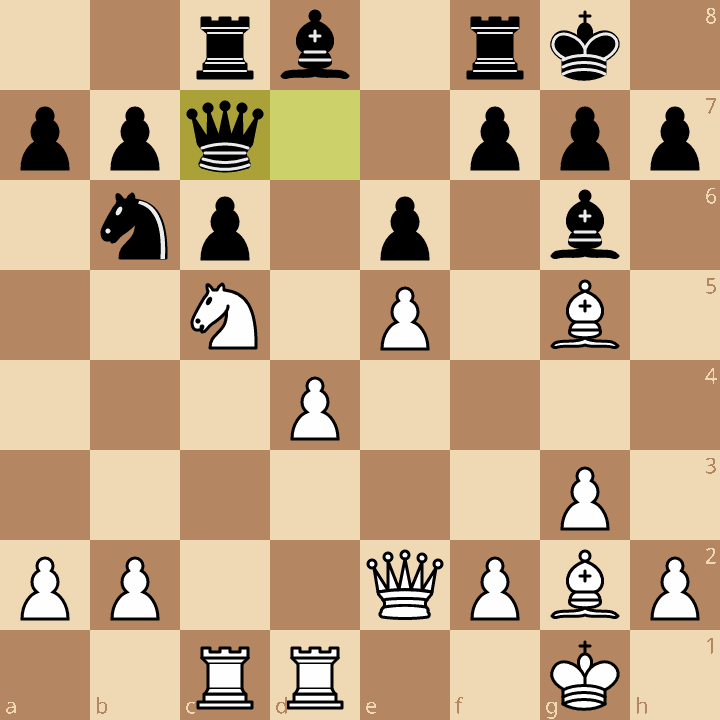
The time control is 60+15, and we are well into the middlegame on move 20. White has just played an intermezzo with the move 19.Nc5, prompting Black’s 19…Qc7. Now, Black is seeking simplifications in order to free their cramped position (a typical plan to when one has a space disadvantage). In this position I had to think of how to continue the game. The following moves were what I considered here:
20.h4. After 20…Bxg5 21.hxg5, White still stands better, and this pawn maintains control over the f6 square, making Black’s kingside position even more uncomfortable. However, I didn’t like the idea of leaving my backwards d4-pawn under the care of a rook if at all possible.
20.f4. The idea is similar to the h4 move, but the added downside of a weaker kingside and possibility of the d4-pawn being taken with check by the enemy queen.
20.Bf4. A move that I didn’t like because in some lines, I wanted to play f4, which well can’t be played when a bishop occupies the square.
20.Bd2. This felt a little ambiguous to me because it doesn’t do anything, and Black is soon to kick the knight off the c5 square, at which point d7 becomes available to the black queen to apply pressure; and it didn’t seem right to me to plant the bishop on c3 instead.
20.Be3. This is the move I spent the most time calculating, because Black has the obvious follow-up 20.Nd5, simply threatening to capture the bishop, making me either move it again or give up the bishop pair. I had to think for a long time, because the structure on e3 didn’t seem to have any play in it at all, and in fact Black could get a really annoying configuration with a bishop on e4, simply raking my king’s lofty position. I hadn’t really considered Qxe3, because in my mind I wanted the queen on e2 to threaten h4-h5 at all times.
I spent about 11 minutes on this position and ended up going with 20.Be3(!?), because I found an alternative idea that didn’t involve getting rid of my f-pawn. In fact, I don’t think it’s any better than any of the other moves, but I wonder if it caught my opponent off-guard as much as it did me, because of how anti-positional it was.
As calculated, my opponent played 20…Nd5. I quickly replied with the slowly-calculated 21.Bxd5!?, trading off the bishop pair… but on my own terms.
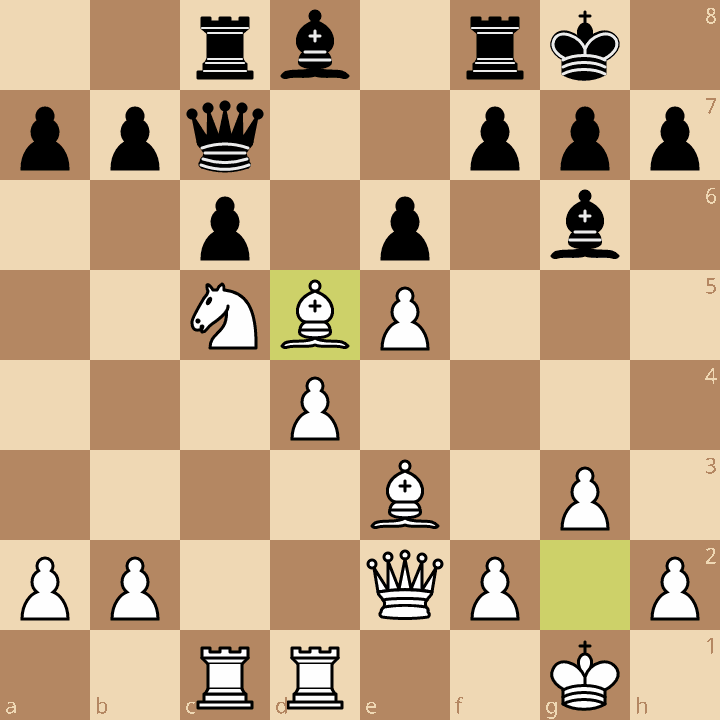
This second anti-positional move had a strange impression on me when I first considered the idea, but I decided to go for it because:
Black cannot capture with the c-pawn: 21…cxd5 22.Nxe6! wins a pawn and an exchange at the very least, and
The capture with the e-pawn removes Black’s control of the f5 square, meaning f2-f4-f5 becomes a very serious threat.
Yes, technically I have just made a bunch of effort to not trade my opponent’s “good bishop” for my “bad bishop”; and instead I have given up an extremely important defender of my king’s position while my opponent’s bishop of the same color is “unopposed” and can therefore dream of controlling all the light-square holes on White’s kingside. But I felt that this was a good plan to try for — the enemy bishop is pointed the wrong way and stands in the way of its own pawns. It cost me 11 minutes and most of my clock advantage at this point in the game, but I ended up winning later down the road.
This ended up being the halfway point of the game, and while the result went well for me, this probably has more to do with my opponent not finding the right plan to defend than the strength of my plan. My opponent missed an idea that would have stopped my attacking plan in its tracks; but it was a difficult position and the necessary move itself would have been quite anti-positional, and therefore hard to notice:
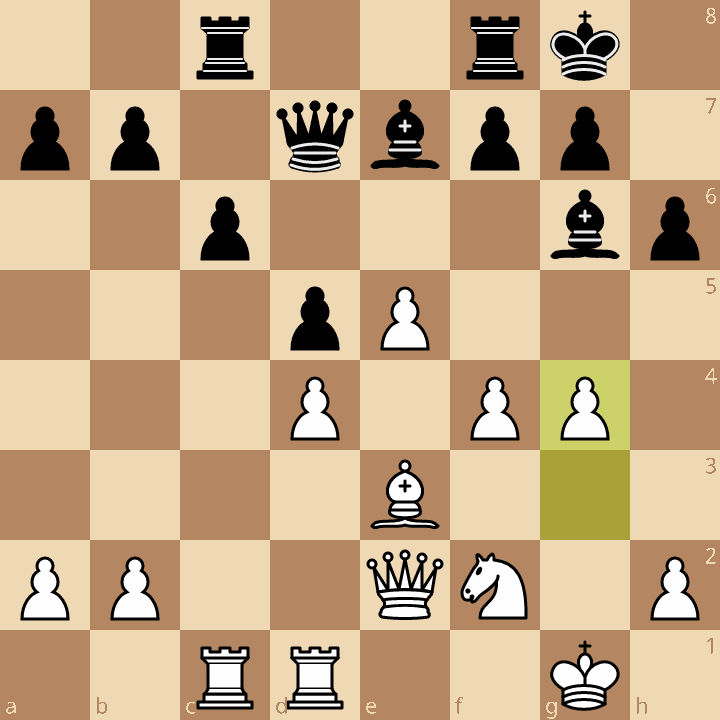
White has meandered with some knight maneuvers and undutifully slowed the attack, and now Black has a way to shut it down permanently. My opponent played 25…Bh4? continuing to seek piece trades after having missed this opportunity a few times. I responded with the move 26.f5! and from here Black’s position deteriorated; White’s pressure on the kingside is overwhelming.
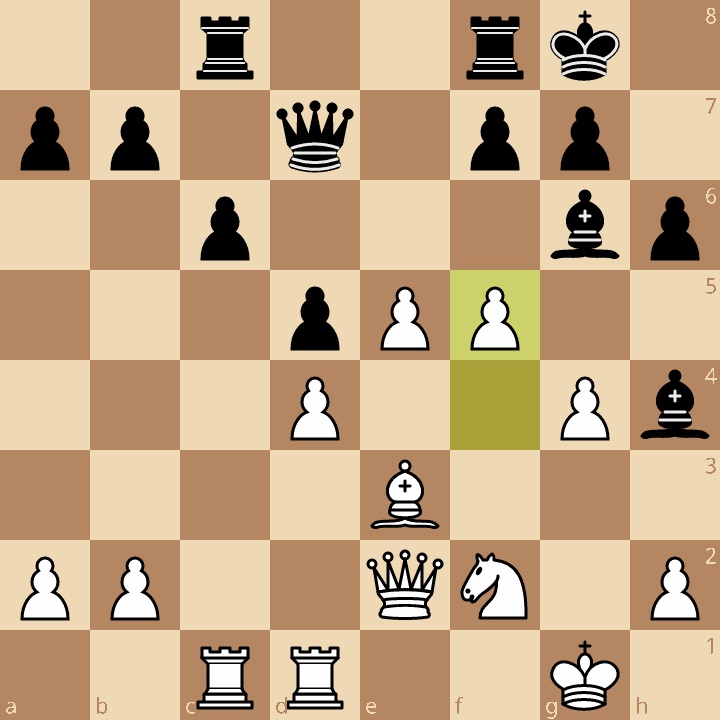
Instead of allowing White to play f5, Black could have played it themselves with 25…f5!
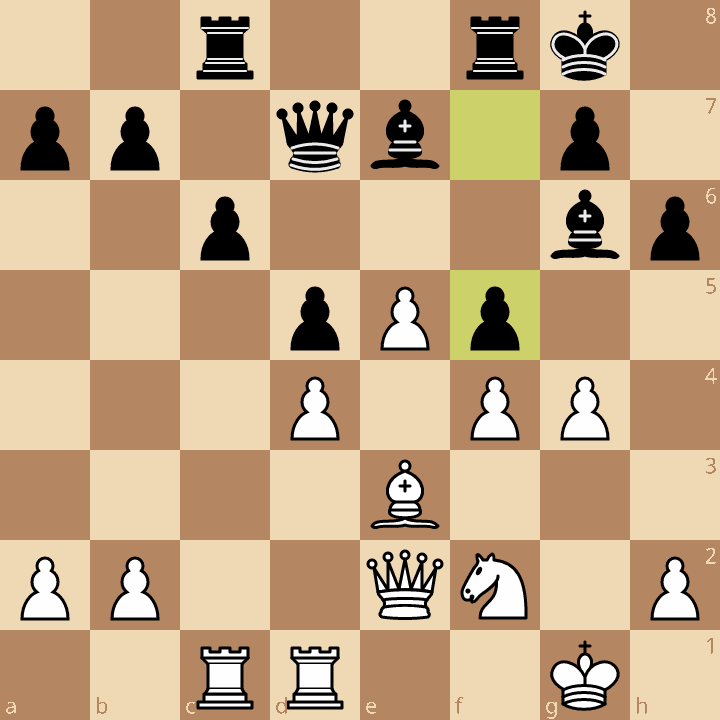
Such a position might leave a slightly strange impression at first, but White would have a lot of difficulty here, because the f-pawn maneuver allows Black to reposition the bishop to a better diagonal via the sequence Bg6-f7-e6:
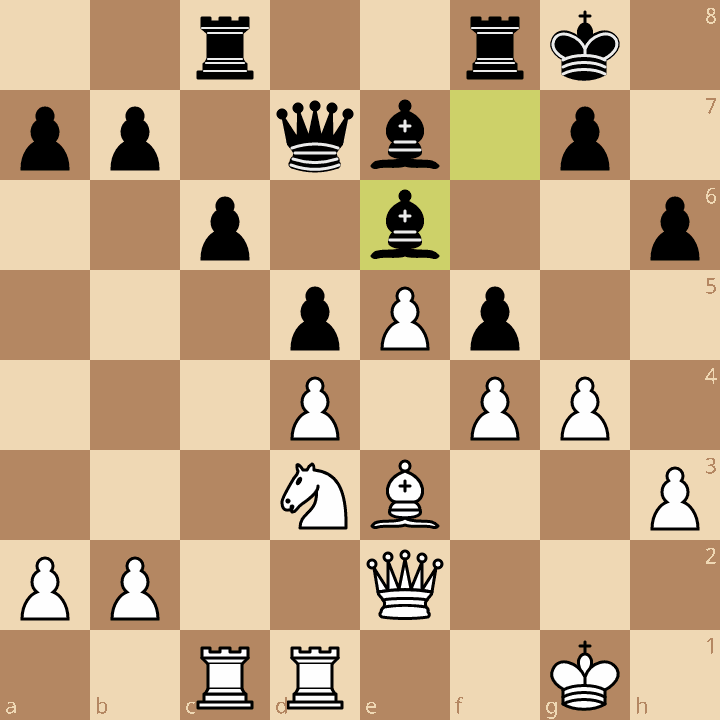
Now Black has managed gain control over the f5 square again, and White’s attack has been turned against them. This would be a difficult position for White to defend.
As it was, I got away with a nice win by avoiding trading off my bad bishop and instead trading off my good bishop, which I thought was kind of neat, it also feels like another sign of maturing as a player for me, because I have always considered myself to have Janowski Syndrome when it comes to giving up the bishop pair (which is to say, I don’t really like doing it, and especially not when it’s my kingside fianchetto bishop).
But, sometimes an anti-positional move (or two) can be good for your position.
I’m not sure I’d call Bxd5 anti-positional. Maybe only in the most dogmatic sense of “bishops better than knights, fianchettoed bishop important”. That knight was a good piece and was going to be a thorn in your side and by forcing Black to recapture with their pawn you eliminate a weakness that was otherwise accessible for Black.
Trading bishop for knight, especially in a closed position, is a perfectly reasonable plan with good justification. Then it’s basically just on white to argue that the nature of the position doesn’t favor bishops.