
Most of us need to keep the chess opening simple
Calculation trumps principles, and other advice for beginners about opening a chess game.

It happened again. Another post on /r/chessbeginners caught my eye.
The user has already deleted it, but it began with a very familiar story to many other posts I see on there, mostly from beginner players.
They talked to an LLM and asked it for advice on the opening, and now they’re wondering if the advice is good. Or, they looked up a video on YouTube and are wondering if the opening is good. Or, they saw something else about the opening and are wondering if it’s good. The poster is usually rated somewhere between 100 and 1000. They want to know what to do with the opening moves. Maybe there’s some fear of failure — they’re worried they’re going to lose the game out of the opening if they don’t make the right first moves. They’re worried their 100-1000-rated peers are going to figure them out and beat them down. They want an opening repertoire and they want it right now. And they need affirmation that the idea that someone else told them is fine.
The advice from stronger players is usually the same: “opening theory is not the issue.”
And they’re right.
Disclaimer: If you enjoy studying opening theory for its own sake, you should do it. Far be it from me to gatekeep something other people enjoy doing. This post is for beginner players who are trying to figure how to play the game and are teetering on the edge of jumping down the confusing and overwhelming rabbit-hole that is modern chess opening theory. I’m writing this with the under-1000 rated player, but this advice goes up to my level too. To a certain extent, I’m preaching to the choir.
There is little worth mastering that a human can master simply by following a rote algorithm, and this is very true about the opening in chess. It is possible for someone to dedicate a lot of time and commit to memorizing very specific lines in the opening, but this also doesn’t constitute the entirety of knowing how to open a chess game.
Beginners are trying to avoid losing those games, when that’s the only way they’re really going to learn how to win the next game.
In any case, beginners should keep it simple. Heck, intermediate players should keep it simple. Heckin’ heck, advanced players should probably keep it simple too. Masters, we find, are the best at keeping things simple. Except when they’re not simple. I digress.
An opening repertoire can be outlined by spending a little bit of time reading a book, drilling opening lines on an online course, or watching a YouTube video, or talking to ChatGPT (I guess). But the actual building and formation of the thing outlined in your mental blueprint only comes from playing games. This is the simple thing that beginners often appear to neglect when seeking advice on the opening — they’re trying to avoid losing those games, when that’s the only way they’re really going to learn how to win the next game.
When you’re opening a chess game, you are given a number of principles to follow. These include:
Control the center. This usually means putting a pawn somewhere on one of the four central squares, on the fourth and fifth ranks. Less commonly, you control the same squares that those pawns would control, yet from a distance with pieces instead.
Develop pieces toward the center. This means, moving pieces toward the center to support the central pawns and/or control the squares upon which the opponent’s own pawns reside.
Keep the king safe. This means, castle early. This also means, don’t castle, if your opponent can immediately attack your king. Usually entailed in this is the idea of not moving the pawns in front of the king if at all possible, as these create weaknesses that your opponent can then exploit.
Every good and appropriate opening for an under-1000-rated player does this. It doesn't matter if it’s 1.d4, 1.e4, 1.Nf3, 1.c4, 1.f4, 1.g3, 1.b3, 1.b4; they’re all going to do this fine. You have to try them to see if you like them and understand them. Take your time. Pick one. Stick with it. Change if you hate it. You don’t really know if you hate it until you’ve tried it for a long time.
The most typical advice for beginners in the opening, and the advice I find the most cogent, is very old, and still works to this day.
Play 1.e4. It controls the center, prepares development of the kingside, which eventually leads to castling. White’s main plan from here is to get a pawn on d4 in the future.
Play 2.Nf3. Against almost every move Black can play, this move works fine.
Put your king bishop somewhere. The bishop gets out of the way, puts pressure on the black pieces, and allows White to castle on the very next move. Note: We don’t suggest Bd3, as this blocks the d-pawn, which would much rather go to d3 or d4, and if it doesn’t move, causes terminal cancer in the position because it cramps its own army. But that’s getting a bit ahead of ourselves (e.g. calculation trumps principles).
Alternatively, White can at some point play the move d4. On move 2, this might be preferable against certain defenses; against other defenses this is gambit-play. In both cases, White is usually completely fine.
The rules are similar to Black, but Black has an advantage in that White has given them a little extra information thanks to having the first move. Symmetrical defenses aren’t always the most popular, but they’re usually very resilient and allow you to play for a win without compromise. General advice:
1.e4 e5: Black wants to play d5 at some point. Defend your e5 pawn with Nc6 if White attacks it. Eventually you want to play Nf6 and get your bishop out so you can castle.
1.d4 d5: Black wants to play c5 at some point. Sometimes you can do this as soon as move 3 — sometimes even move 2(!). Otherwise, keep it solid. e6, Nf6, Be7, O-O.
Remember, I already said that any opening is fine. Queen’s Gambit. King’s Indian Defense. King’s Indian Attack. Sicilian. King’s pawn. Nimzo-Larsen. Whatever. The world is your oyster. If you want to play the London System, you should play the London System. If you want to play the English, you should play the English. If you want to play the Cow Opening If you want to play the Caro-Kann, you should play the French Defense. Etc. Any opening is fine. Promise!
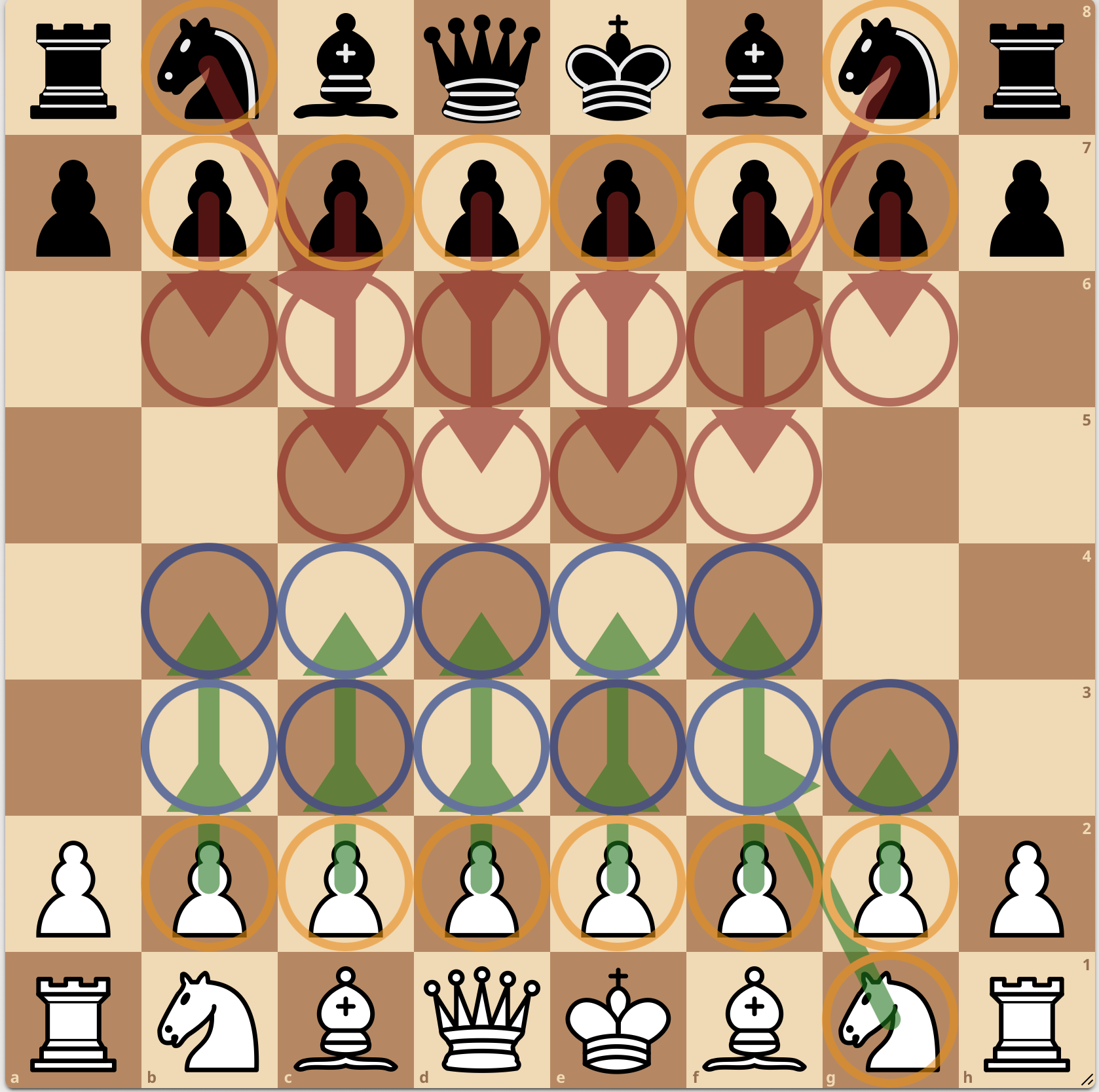
After this, more principles come into play. Some sub-principles include:
Don’t make too many pawn moves. The reasons are relatively basic. Pawn moves always introduce some sort of weakness in the position. More pawn moves = more weaknesses. Additionally, pawns are not nearly as active or powerful as pieces. They move one square at a time, and can never retreat — they’re slowpokes. The player who moves more of their pieces than their opponent is often in a better position, because pieces are faster than pawns.
Don’t move a piece more than once. Usually, somewhere on the third or fourth rank, your pieces are the most effective while being relatively secure in their positions and moving your knight twice means your opponent gets ahead if they move their knight once and their bishop once. That’s a 2:1 advantage in their favor. No bueno.
Don’t bring your queen out too early. She’s a glass cannon and threats against her by virtually any other piece other than the enemy queen near-guarantees you must move her again. The most common example of this principle is a bit silly: 1.e4 d5 2.exd5 Qxd5 3.Nc3.
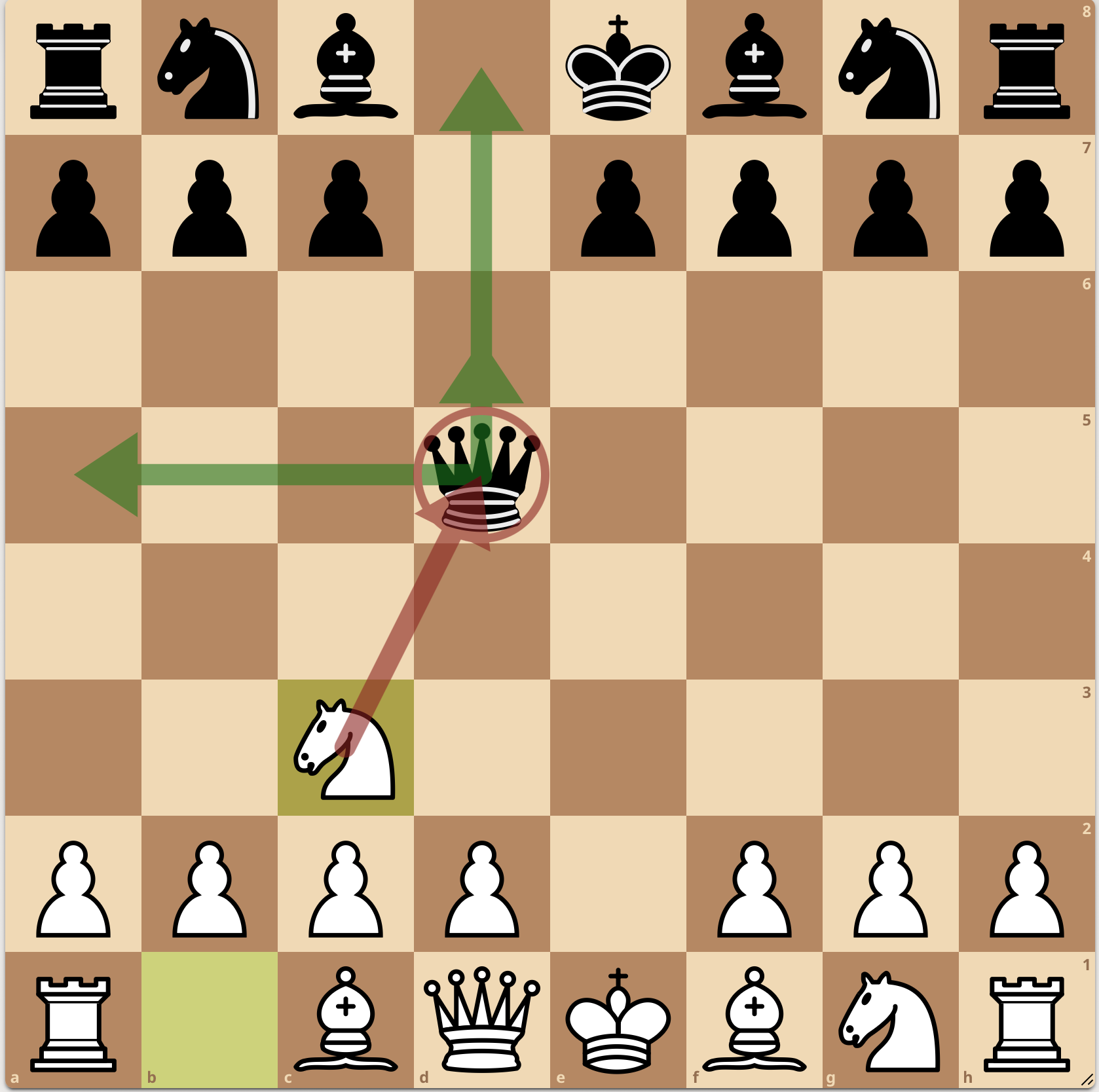
Black has to move the queen somewhere else or else she gets caught. It’s silly because in fact this opening is completely fine, because calculation trumps principles. But I’m trying to bury the lede.
Most of these principles have to do with the concept of time in chess. Or, as we like to call it, “tempo”. These moves represent a waste of time inasmuch as they allow your opponent to “get ahead” by having more of their pieces more developed than yours.
Here’s another set of principles:
Knights before bishops. For starters, usually the king’s knight belongs on the f3/f6 square. The queen’s knight will usually go to either c3/c6 or d2/d7. Since you usually know where the knight should go first, it should be moved first before you move a bishop. Sometimes this is further clarified: knights before bishops per each side.
Connect your rooks. Once your knights and bishops and queen are off the back rank, your rooks “see” each other and work as a strong defense against back rank attacks. Two rooks are so powerful that, all other factors being equal, an enemy queen usually cannot make progress against them.
When a player begins to understand the advantage that sound opening principle usage brings, they also learn and grow deeper in the knowledge of the main positional attacking principle: A lead in development is a signal to attack the enemy position.
More advanced principles come after these, and they get really complicated and nuanced as you rise up the rating ladder, but the given above are the most common ones players are usually taught. And by-and-large, they’re also the principles that good players use. Good players who know more opening theory still follow these principles, because their roots in the theory they know are intertwined with those same opening principles.
But strong players don’t just follow principles; they are aware of many of the innumerable exceptions to opening principles, and that’s where I think newer players get frustrated with this advice. Not because it’s wrong, but because they treat principles as if they were laws.
You will need to see where principles fail to apply correctly in order to understand the limitations and exceptions to them. Once you understand these factors, it opens up more possibilities, and certain assumptions or preconceptions about the game are ready to be deconstructed and reformed into something that closer represents the reality that chess is in fact an extremely complicated game and that you cannot simply systematize every series of opening moves into a series of principles. You begin to pick up motifs, pawn structures, typical configurations, the subtleties that make the game both more frustrating and more beautiful than you had thought possible.
For instance, 1.e4 becomes not just about quick development and being tactical. It becomes about controlling the d5-square and preventing Black from making that break; now you begin to realize the power of preventing the move d5 from coming with tempo to free their game. But building this knowledge into something that changes everything that you do during the game and change why you do it takes many, many moons. And suddenly, other openings begin to make sense — openings that you’ve never played before, because you’re building up knowledge that actually extends beyond the games you have been playing.
Lastly, I want to say specifically regarding 1.e4, the idea that it represents an insurmountable amount of practice to maintain a working repertoire is grossly overstated; if you’re playing chess for the long haul, then over time you will naturally learn how to play against every defense Black uses. Psychologically, it’s a losing proposition to dread any defense by Black, when White’s position is sound. Besides, you will find that Black has annoying defenses against every line that White can play, regardless of the opening — regardless of your first move. But an annoyed player usually plays worse. In my opinion, it’s better to learn to enjoy each position equally.
Finally, there is at least one meta-principle that trumps general principles. It overrides every other consideration in the opening — this is actually true for each and every possible position in chess. It is:
Calculation trumps principles. This sounds very complicated, but in fact can be very simple. Consider the Ruy Lopez Opening:
1.e4 e5 2.Nf3 Nc6 3.Bb5
The most common defense against this opening is 3…a6.
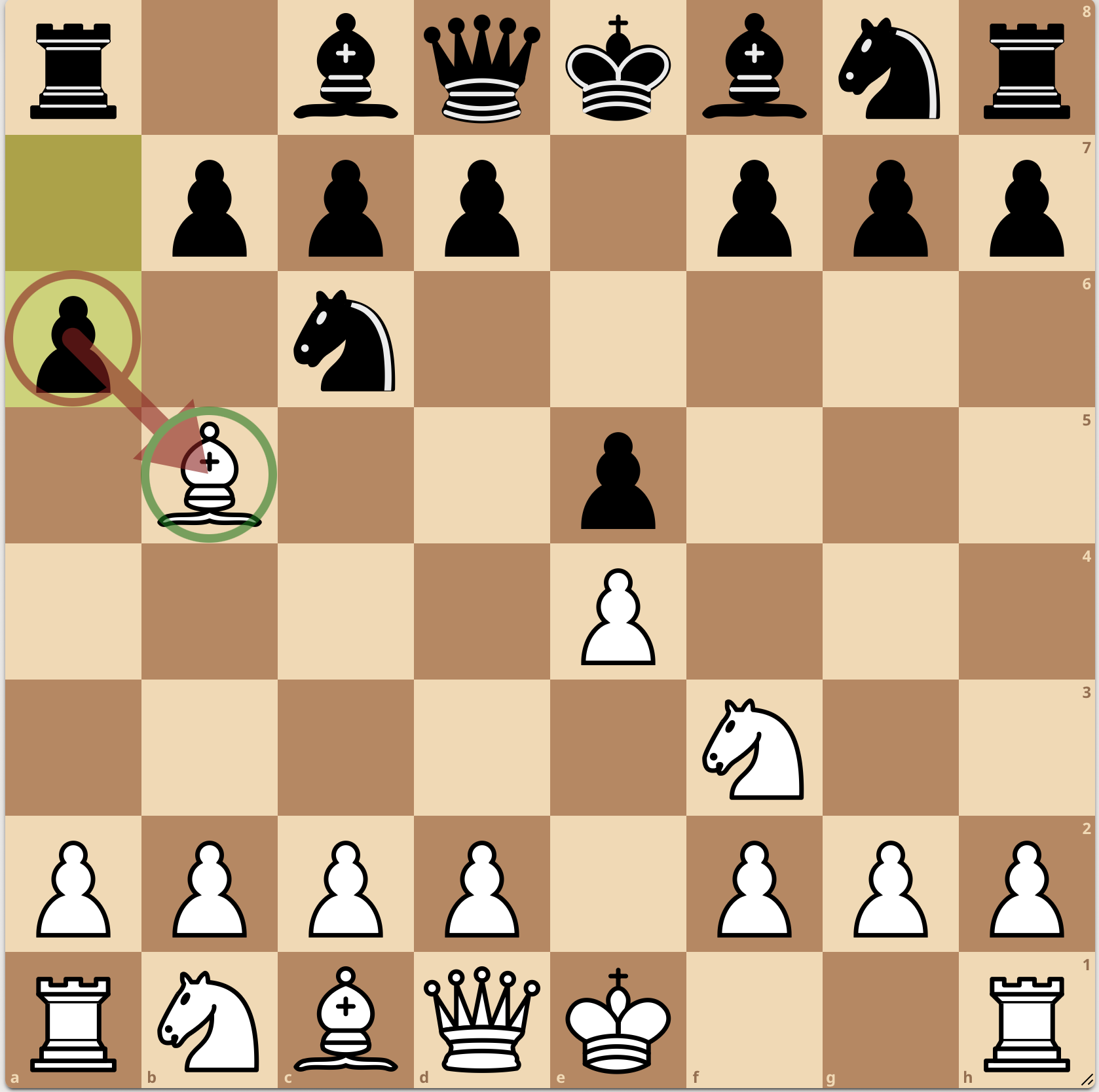
Rote following of opening principles may lead a beginner to believe that castling is a good idea. However, if White plays 4.O-O, then Black will play 4...axb5 and have a winning position due to the extra piece, despite not having followed the obvious opening principle advice to continue developing with a move like Bc5, or Bb4, or Nf6. So, White by necessity of the position’s demands, calculates (or has already priorly evaluated based on past experience) that any move that doesn’t move the bishop leads to its capture by the a6-pawn. Ergo, the most common move here, and the one that masters play most often is 4.Ba4.
Now Black can continue development with a move like 4…Nf6 with a threat of 5…Nxe4.
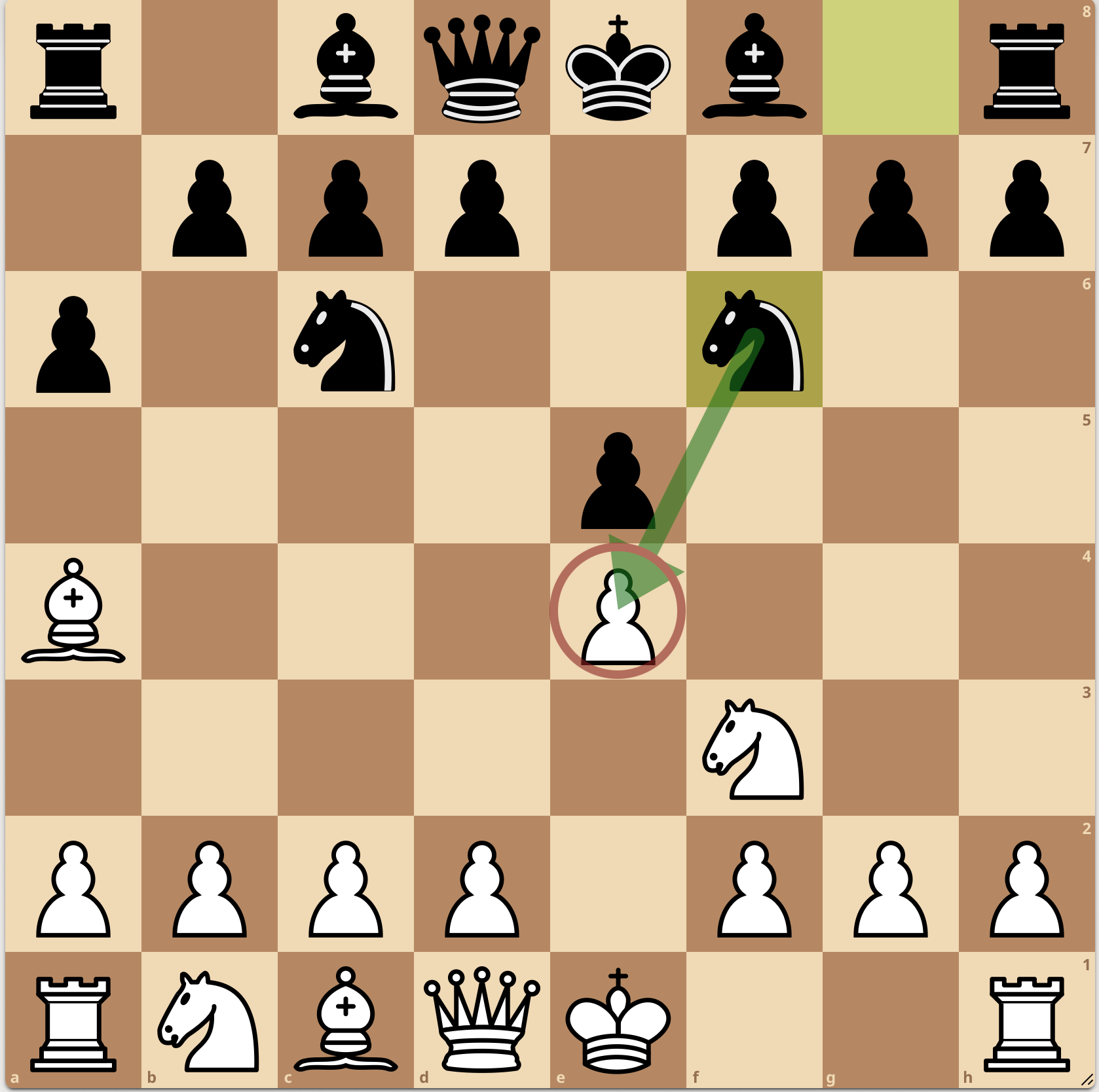
It turns out that White need not defend this pawn at all, and the move 5.O-O continues the mainline, simply allowing Black to take the pawn on e4, either because White has calculated that they will eventually get the pawn back (for instance after 5…Nxe4 6.d4 b5 7.Bb3 d5 8.dxe5); or because White knows that Black will have some stability problems in their position due to the looseness of the Black queenside and the strong pawn on e5; or perhaps because White has played this position so much it has become like a beloved family member and positional intuition simply takes over any concerns about calculation — positional intuition that can only be built by playing this position over and over over.
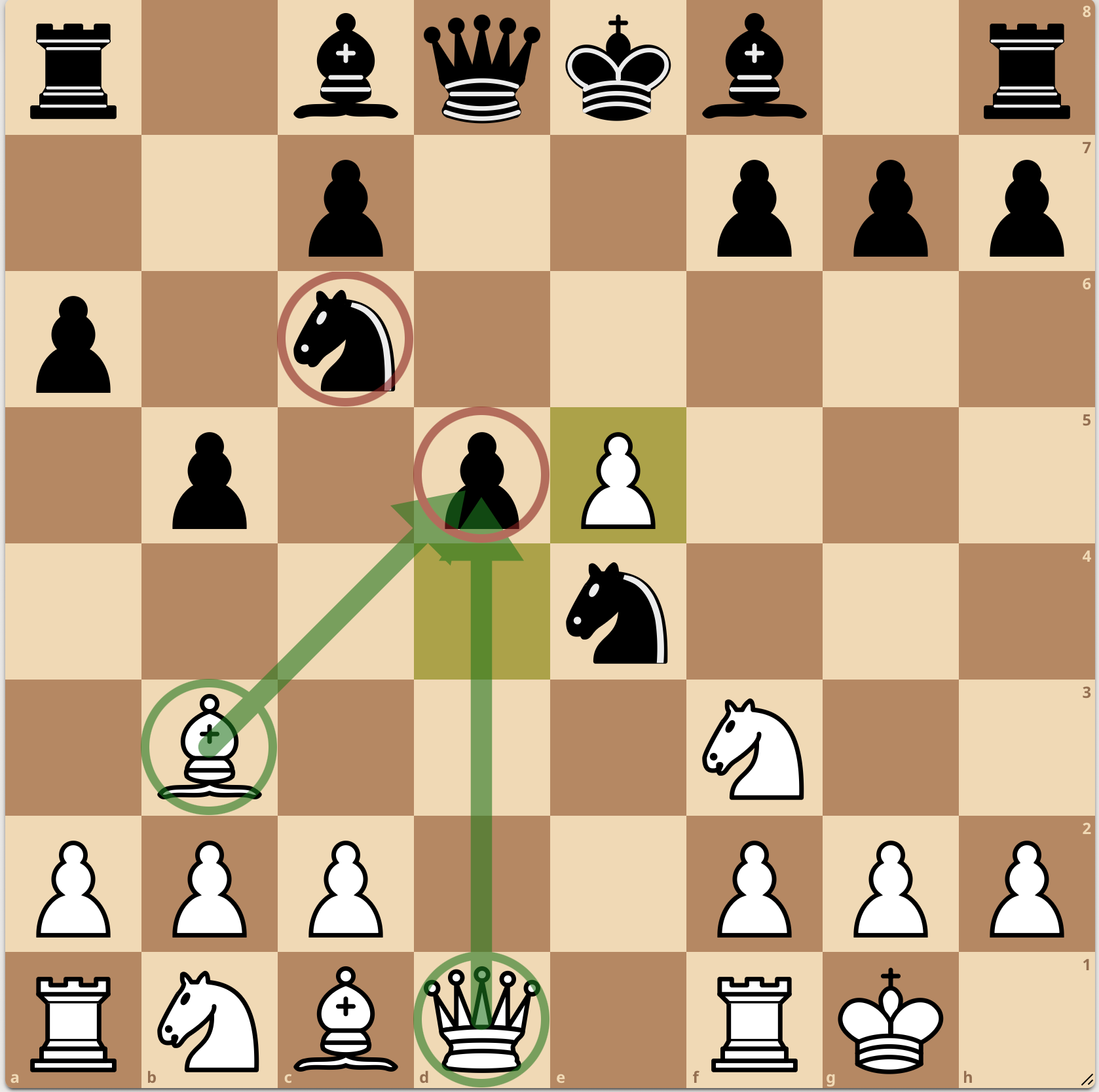
In any case, 8 moves of theory is a lot to memorize, and the vast majority of players at the under-1000 level will never see nor play these deeper lines, and therefore studying them represents a gigantic waste of time. At this level, the expected value from studying the opening theory this deep is extremely minimal.
Hence why we preach the fallible yet useful opening principles instead. The principles, like the pirate code, are guidelines. We suggest these principles because asking people to memorize 3^15 (~14 million) half-moves to get to move 8 without losing is rather impractical, and in fact, not how human beings think about any game.
In a certain sense, it doesn’t matter what opening you choose (except the Cow), because both sides still have to play a game of chess. Changing the opening too frequently reduces your ability to get the same kinds of positions, which is the exact thing you need in order to grow in playing that opening. You can’t learn them all, but you can learn a couple. If you play 1.e4, you will eventually have to learn how to play against all of Black’s defenses against it. This will take time — years. But, if you’re in it for the long haul, that shouldn’t bother you, because chess is a worthwhile game, and it is not only OK, but necessary, to build up the skill to play against all kinds of openings by taking your time playing the game.
This means you are going to lose games. This is also the path to winning games. No amount of opening prep will be able to prevent a stronger player from muscling you out of your comfort zone and handing you a big fat L, whether they do it by grinding you down or a crackpot tactical finesse. They’re going to know more, but even when they don’t have the theory in their head, they will be able to out-calculate your prep, or find a way to cause problems. And your opening prep will fail. It must, so that you can revise it for the next game, and become a stronger player. You’ll have to do this thousands of times to get better. You will lose thousands of games. Maybe tens of thousands of games. This is how every strong player has ultimately improved.
Great post, and love the thumbnail! (I wasn't a fan of Season 2 though, did you watch the show?)
Beginners switching chess openings makes a lot of sense actually. You can't find what types of things you like to play by playing the same thing indefinitely. And online rating doesn't matter so you are free to trash your rating to explore what interests you. Also, one way to stop being bothered by an opening is by learning it yourself. I hated the French, and then played it myself and found out the ideas against it that way. OTB it makes a little more sense to stick with something as you want to get the most bang for your buck.
But there's no reason to stick to an opening if you don't enjoy the positions you get most from it. A lot of people get tricked into playing the London by Youtube videos, and end up bored after awhile.
Though there's the second trap of switching openings to try and gain rating people fall into. And that is something people really should be warned about as beginners. You shouldn't try to chase ratings via openings.