
2026 FIDE Candidates Round 1
Looking at some interesting moments from the Open and Women’s games in Round 1 of the 2026 edition of the FIDE Candidates Cycle

First off, a tactic:
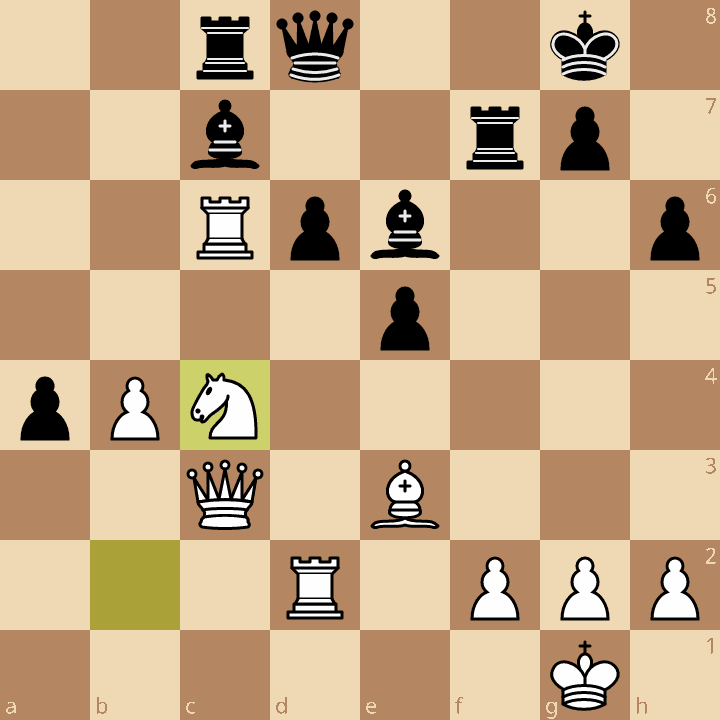
Goryachkina - Lagno
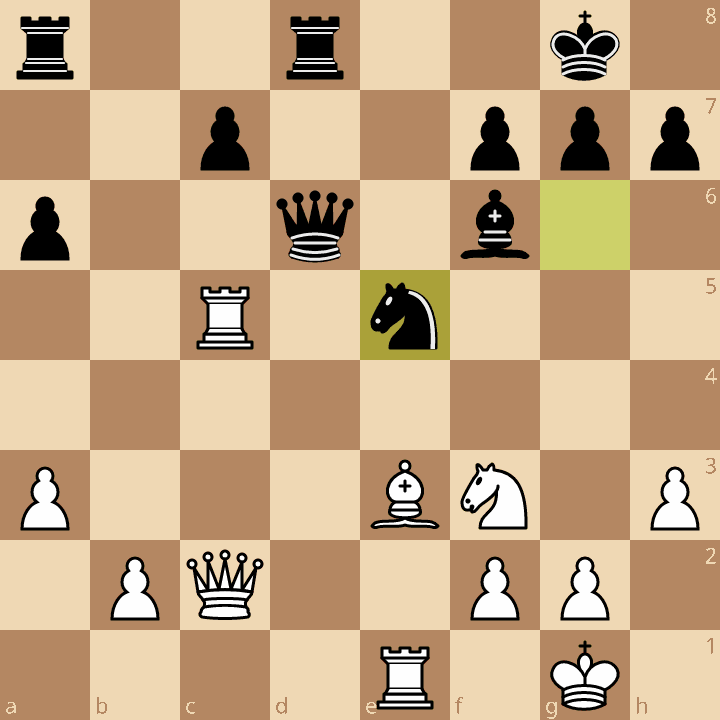
Goryachkina missed a tactic that would have lead to a dead-won position. Can you find the move? Answer at the bottom of the article.
Sindarov - Esipenko
How not stopping a trend can can lose a winning game:
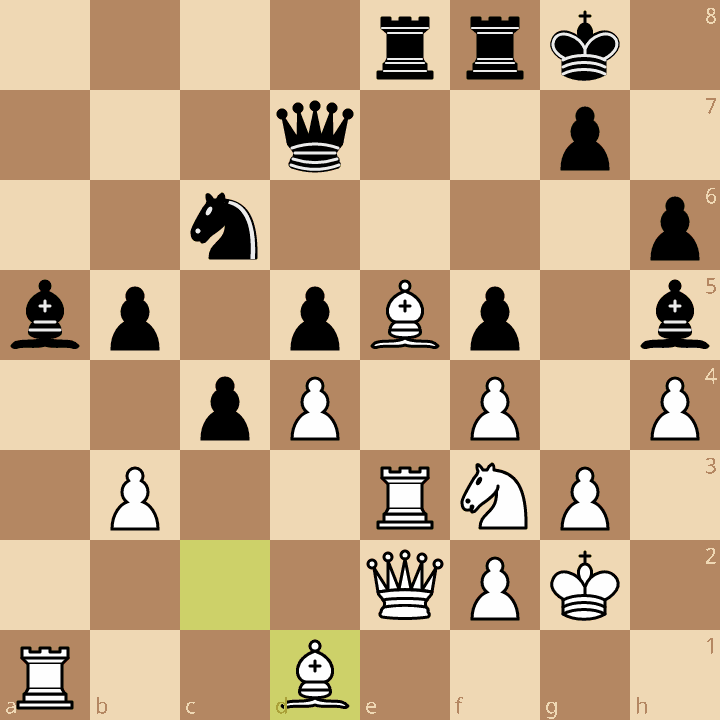
Up to move 26, Black was playing excellently and for choice in this position. The move 27…Bb6 comes to mind, putting pressure on the weak d4 pawn; the bishop on h5 performs an excellent job controlling the light squares, and has a strong pin against the knight on f3. Black has every reason to play for a win here.
Somehow Esipenko chose 27…Bxf3, an inscrutable move to me. Seeking a human understanding of this move, I checked the chess.com, Chess Dojo, and FIDE streams, and only commentator GM Peter Svidler on FIDE’s official YouTube channel had anything to say about this, and so stated with pain:
“Very unusual choice by Andrey there. I have no idea why he felt he needed to give up that bishop. And now White is just fine.”
It is tragicomical that after White’s 28.Qxf3, Esipenko played the move 28…Bb6 one opportunity later than he should have, and insodoing lost all of his 14-minute time advantage over Sindarov despite the position being equal. I think this was a huge contributor to his later blunder after 29.Ra6 Nxd4 30.Qh5 Rxe5 31.Rxe5:
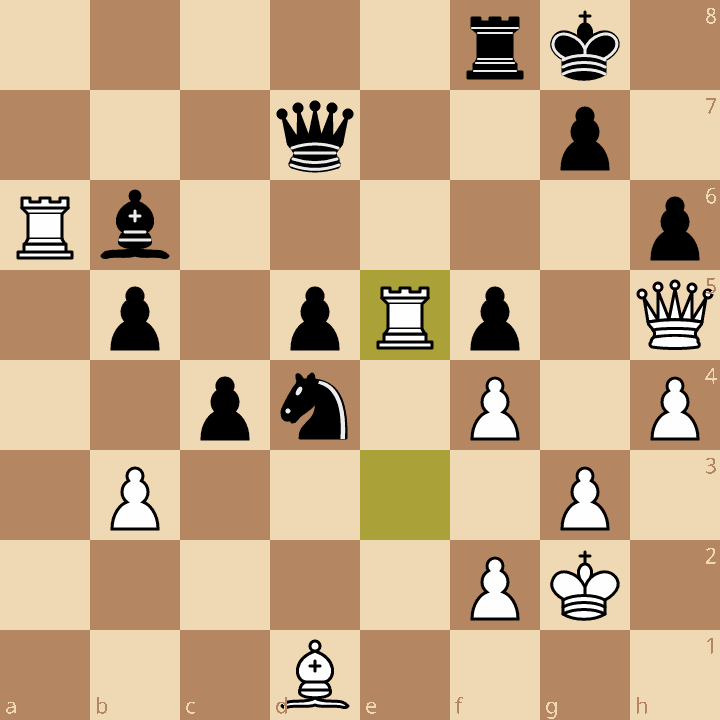
In this position, Black is very uncomfortable and has to do something about the hanging bishop on b6. 31…Bc7 comes with a slight tempo against Re5, but perhaps Black foresaw 32.Ra7 with a pin, which doesn’t look dangerous but adds complications, which feel dangerous when you are low on time. Esipenko only had three minutes on his clock and chose 31…Qc6?? After 32.bxc4 bxc4 33.Ba4, White’s bishop is activated with tempo on the enemy queen, ready to start raking Black on the light squares. Indeed the end result was White’s win with a crushing attack after reconfiguring the pieces and utilizing the e-file to trade off Black’s last rook, with a mating attack to come soon after. After 41.Re6 threatening Re8+, Esipenko resigned.
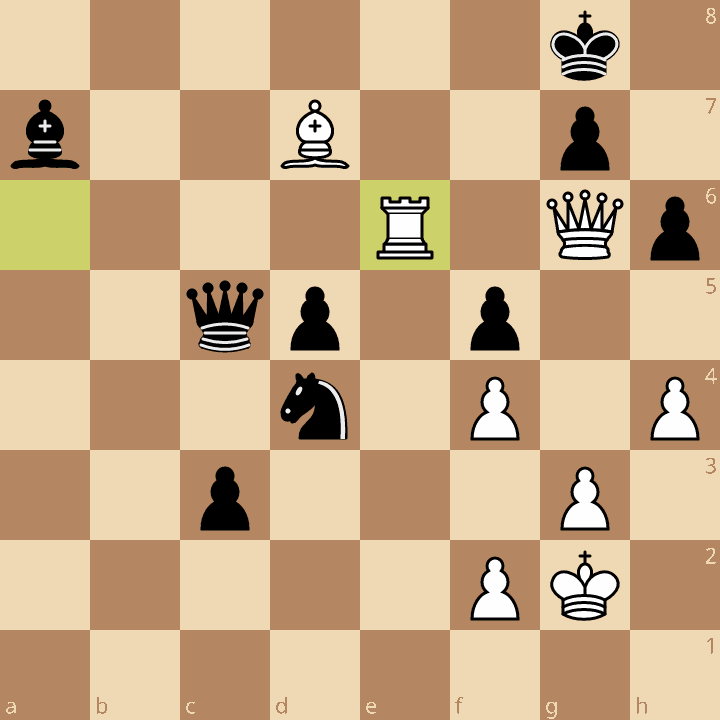
Pragganandhaa - Giri
MVP DSB
Pragg played a really interesting Grand Prix against Giri’s d6-Sicilian, and I found the journey of the c1-bishop most compelling:
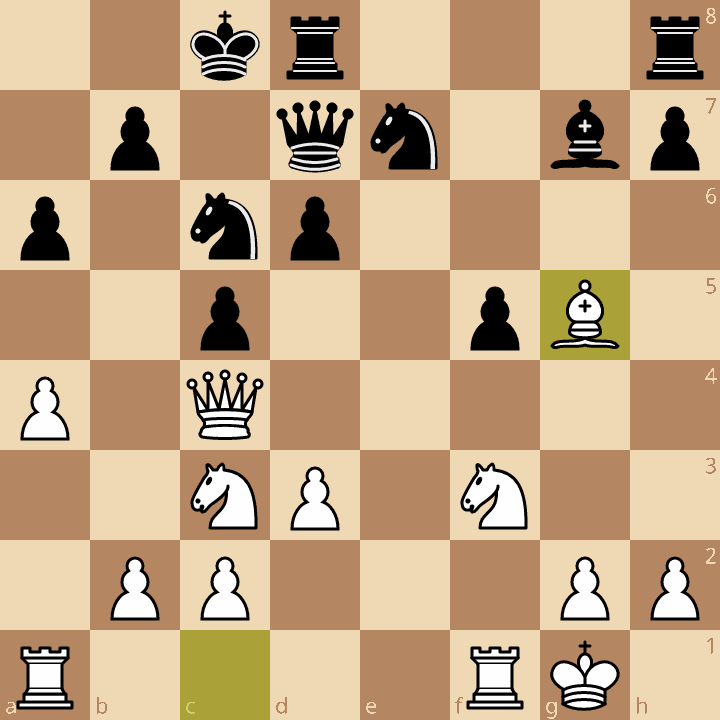
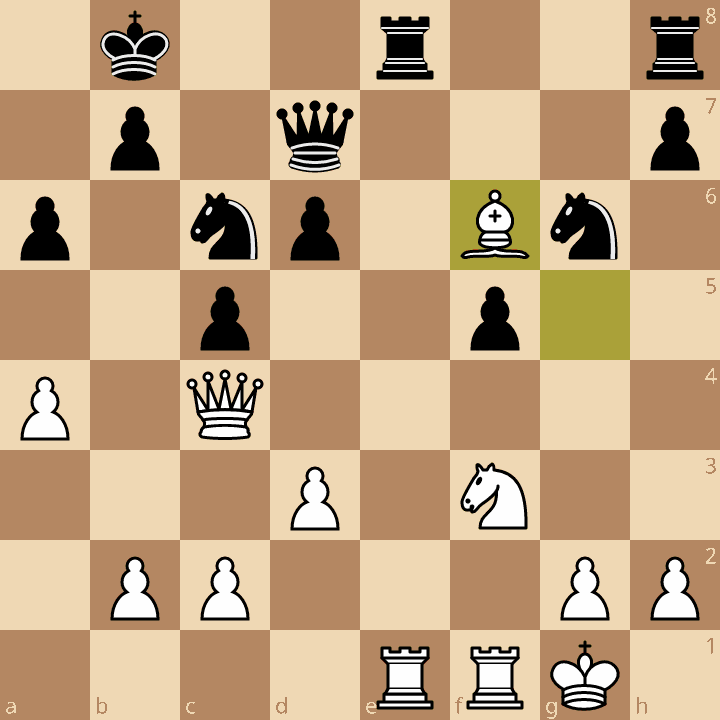
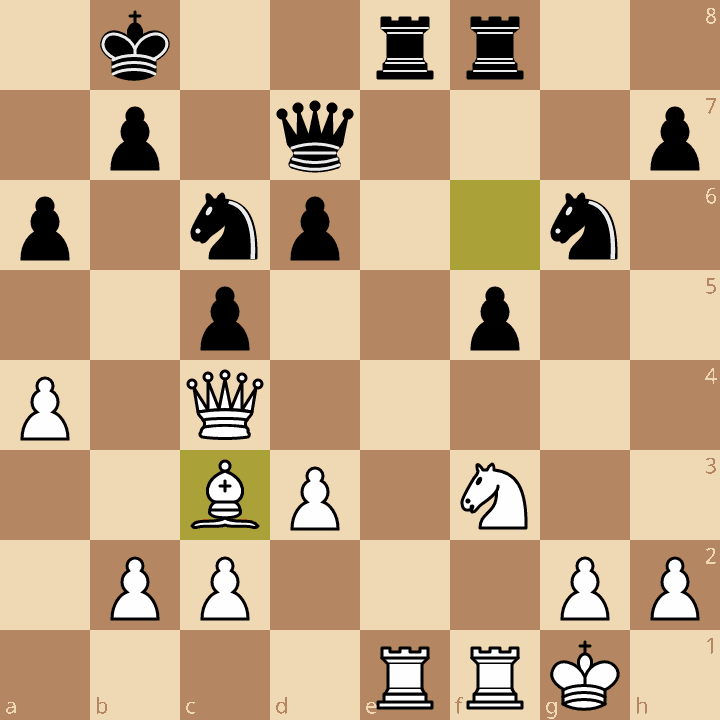
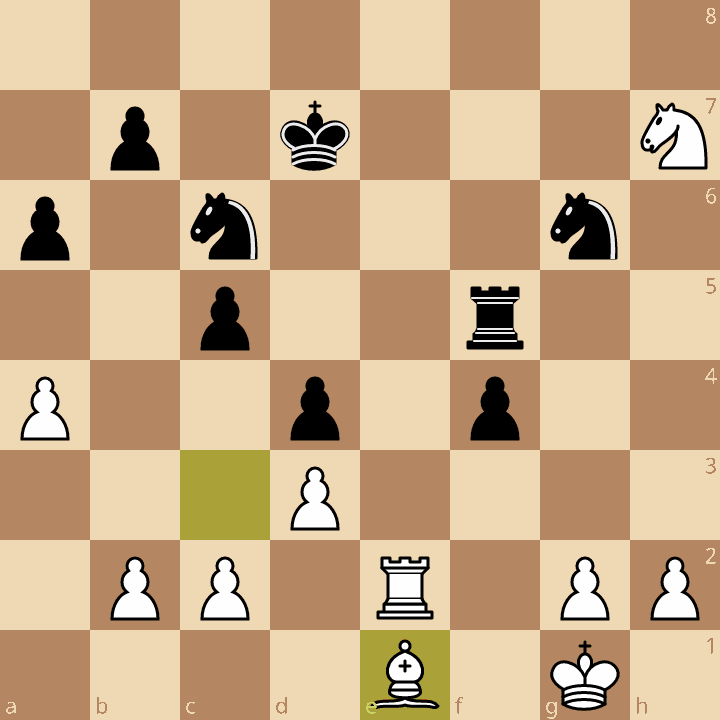
This position is essentially equal. White can press for a small advantage due to the passed h-pawn, but it’s by no means lost for Black yet. From here the bishop doesn’t move for the rest of the game, and 11 moves later is captured by one of Black’s knights, but by the time this has happened, it has done its job to escort the h2 pawn so that it can get to h6, at which point White is completely winning. It was the MVP of the game and did its best work on the first rank by controlling a flank square — not a typical Bishop. Pragg picked up a point later when he was finally prepared to advance this pawn to h7, but he couldn’t have done it without Be1.
Caruana - Nakamura
Fabi grinds out a win for a huge start in the Candidates
It’s no small feat to beat the rating favorite in any tournament, but to defeat Hikaru Nakamura is another level. Most of the game is an excellent example of how to play an attack against an opposite color bishop.
For the first 24 moves of the game, things were equal; but Hikaru started to slip soon in an opposite-colors bishop endgame. Fabi applied a lot of pressure with a superior light-squared bishop and on move 32 things went from bad to worse as Nakamura searched for counterplay:
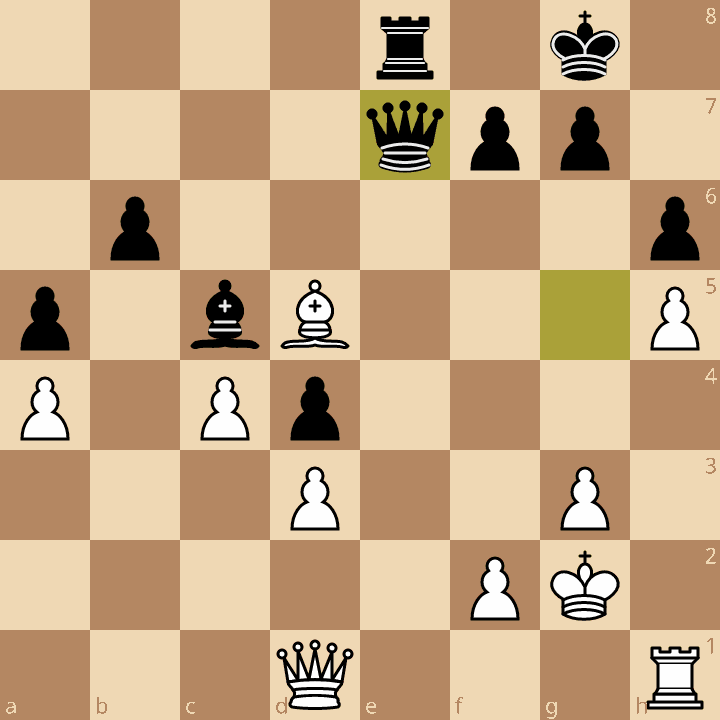
The unpleasantness of the position is palpable, because of the long-term pressure against Black’s kingside thanks to Bd5 and h5. White continued to grind things out until Black cracked further:
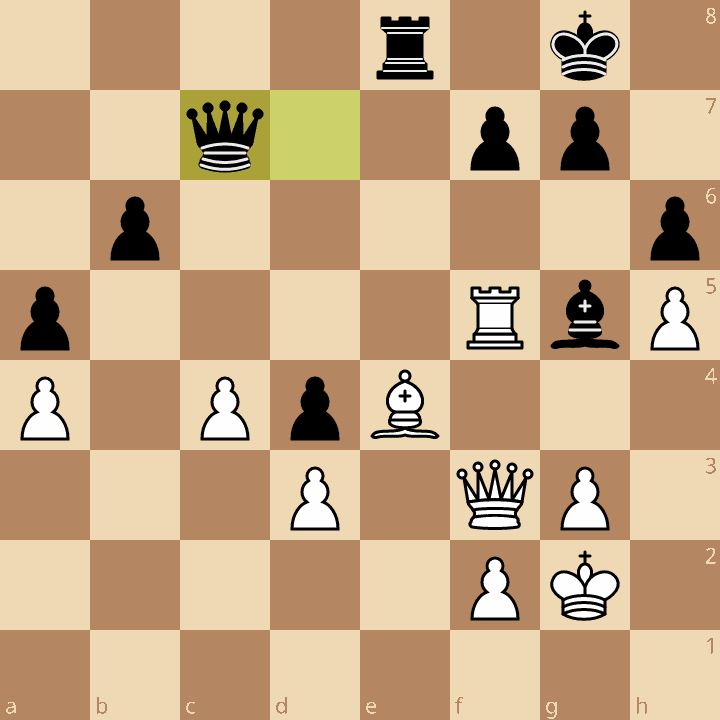
Here Naka had played 48…Qc7? and Fabi uncorked a nice combination to win a pawn with 49.Rxf7 Qxf7 50.Bd5 Re6 51.Qg4 Kf8 52.Bxe6. From here the win was a further matter of technique, but the increment was short and both players made inaccuracies.
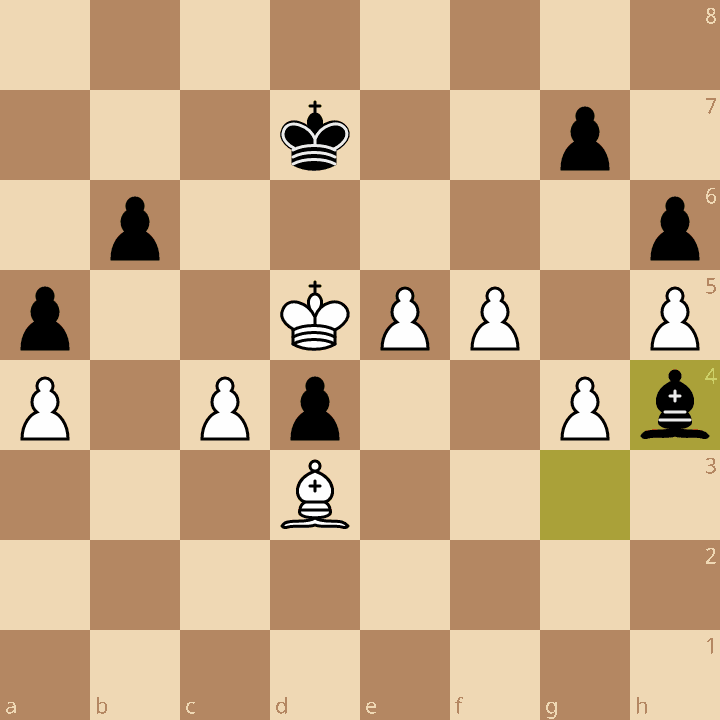
Here White jeopardized the win with 79.f6?? and Nakamura was suddenly within distance of a draw after 79.gxf6 80.e6+
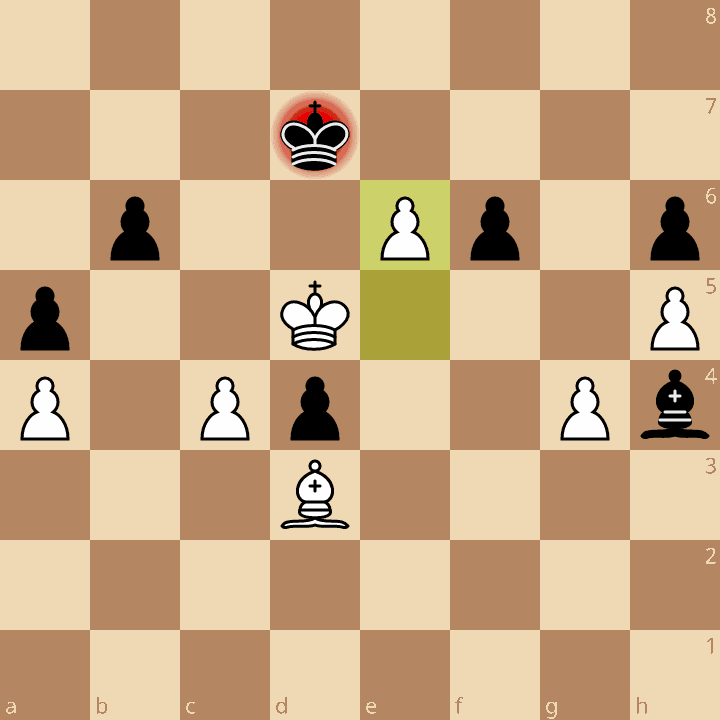
80.Kc7 draws easily: 81.e7 Kd7 82.e8=Q+ Kxe8 83.Kc6 f5! (getting critical control of the c7-square to prevent promotion) 84.Bxf5 Bd8. But, Chess is cruel; under time pressure and the haze of a 6-hour struggle that mostly consisted of being in a poor position, Nakamura played 80.Ke7??, and after 81.Kc6 Kxe6 82.Kxb6 Be1 83.c5, resigned. Huge win for Fabi in what might be his last and best chance to win the championship.
Vaishali - Assaubayeva
Vaishali escapes by the skin of her teeth
Bibisara’s debut in the Women’s Candidates was strong, and she had a comfortable advantage as Black in the Sicilian Defense, but she slipped slightly in trying to defend against a tactic that Vaishali was counting on to equalize in this complicated position.
Under harsh time pressure, Vaishali played extremely accurately after Bibisara’s 28…Bd7; after 29.Nxd6! Bxd6?! (29.Bxc6) 30.Rdxd6 Rxd6 31.Qxc6! Bxc6 32.Rxd8+ Rf8 33.Rxf8 Kxf8, Vaishali sufficiently liquidated and clinched a draw 8 moves later — a huge save in the first round.
Goryachkina - Lagno solution:
24.Rxe5! Bxe5 25.Bc5 (the point: White gets two minors for the rook) Qd3 26.Qxd3 Rxd3 27.Rxe5 with a completely winning position.