
Carlsen - Lazavik, 2026 Esports World Cup Finals, Set 2, Game 4
When your opponent is compelled not to accept a grandmaster draw.

A very striking game in the finals of the 2026 Esports World Cup. For context, Denis Lazavik had the black pieces against Magnus Carlsen and was in a must-win situation, which makes Carlsen’s choice of opening quite clever. I found this game very entertaining and I hope you do as well.
1.e4 c6 2.d4 d5 3.exd5 cxd5 4.c4
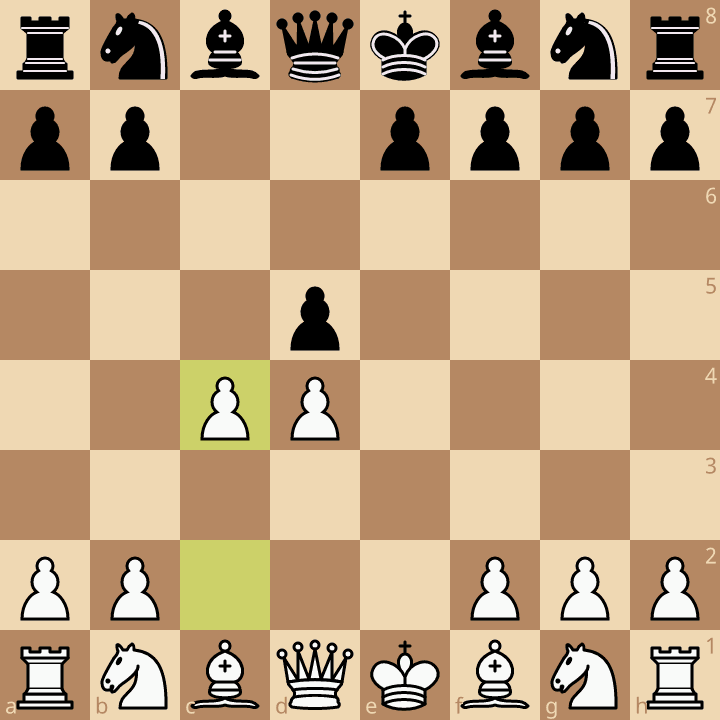
This is known as the Panov (sometimes, Panov-Botvinnik) Attack. It was Botvinnik’s bread-and-butter, and it has enjoyed popularity here and there in the annals of chess history. Nowadays, White has been trying their luck and scoring decently well more with the Advance Variation (3.e5). The Panov is quite a different kind of game. White is allowing Black to saddle them with an isolated queen’s pawn via the move dxc4 (not to mention thinking of it themselves with the move cxd5). Black has a more solid structure, but in exchange White gets a lot of piece activity on the semi-open c- and e-files. But we’re getting ahead of ourselves here.
4…Nf6 5.Nc3 Nc6 6.Nf3 a6!?
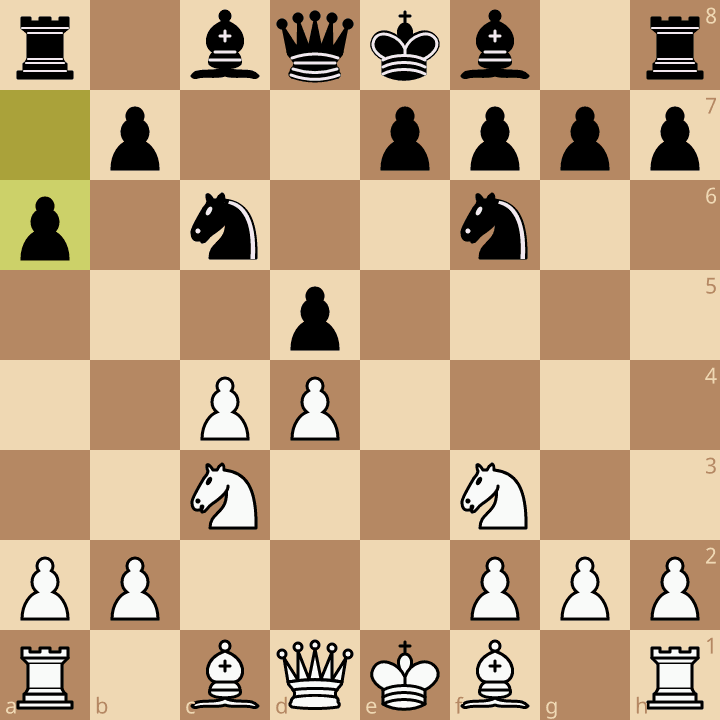
This is the kind of move that might be subjected to a critical rant by Irving Chernev (who derided these kinds of munchkin pawn pushes with the phrase “a coffeehouse move!”). And in fact, in the hands of an amateur, this move might be the sign of uncertain play. But it turns out that, at least according to the Lichess Masters Database, this move started picking up in popularity especially around 2023, and in 2025 it was played nearly as often as the most popular move 6…Bg4. To me 6…a6 seems quite playable. It controls b5, preventing a move like Bb5 right out the gate. It also prepares the move b5 in certain possible lines. It is certainly not incorrect.
7.cxd5 Nxd5 8.Bc4 Be6
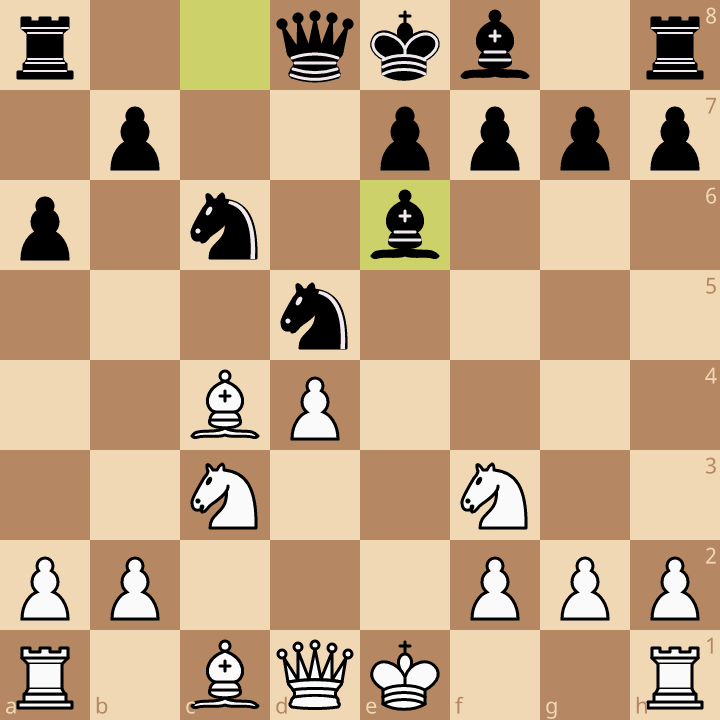
Black does not yet want to capture on c3, which would allow White’s structure to improve slightly, while vacating the d5 square for an IQP pawn push. 8…e6 seems a bit ugly, due to locking in the bishop on c8. So instead, reinforcing the knight on d5 seems like a good idea.
9.Ng5!!
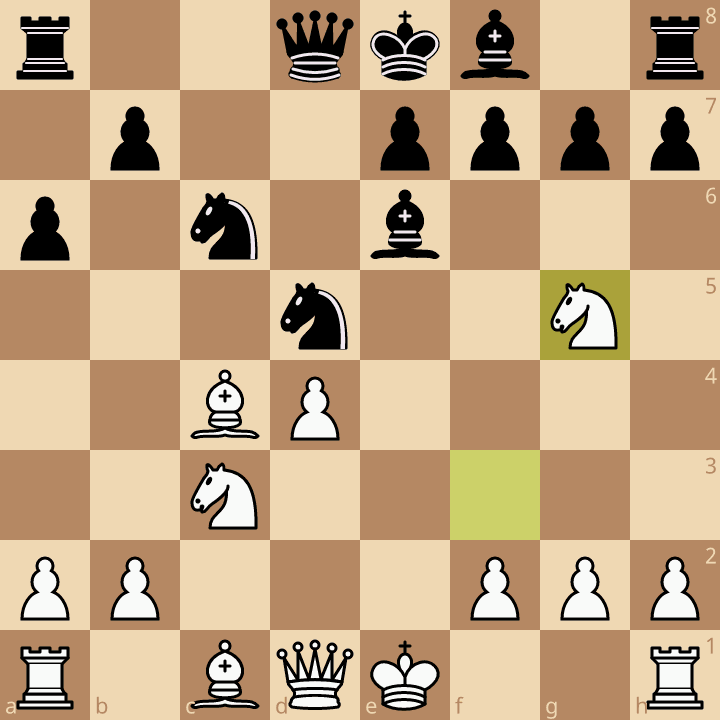
The additional exclamation is due to the match situation: Lazavik is in a must-win situation. Why this matters will be seen shortly. Carlsen chooses a sequence that promises entertainment.
9…Nxc3
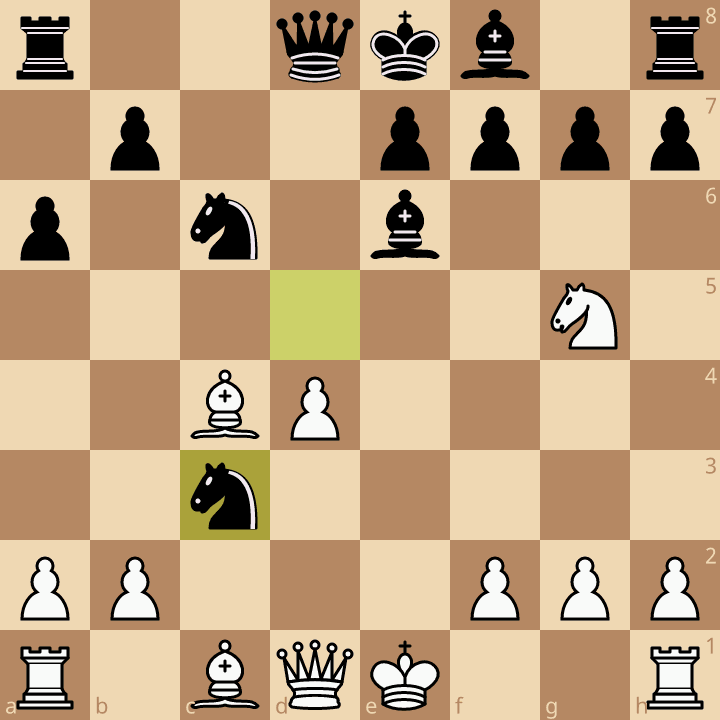
The position sharpens immediately. Black captures a piece and threatens two more: The bishop on c4 and the queen on d1.
10.Bxe6!!
Not 10.Nxe6??, the overwhelmingly popular move played by players on Lichess. In response Black has 10…Nxd1 11.Nxd8 Rxd8 12.Kxd1 Rxd4+ and Black picks up the hanging bishop on c4.
Magnus sacrifices his queen, but will get huge compensation in return.
10…Nxd1 11.Bxf7+
An important intermezzo.
11…Kd7 12.Be6+
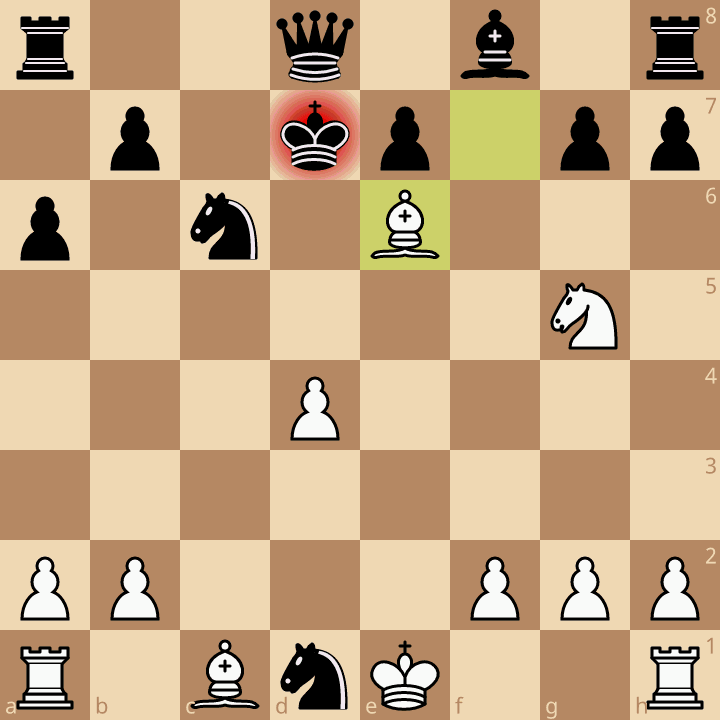
If Black were not in a must-win position, a draw could be easily agreed after returning the king to e8, as White can repeat with checks on f7 and e6. But Carlsen chose this option precisely because accepting the grandmaster draw in this game would mean losing the set for Lazavik. The psychological pressure on Black cannot be understated in such a situation.
12…Kc7
12…Kd6 is disastrous after 13.Bf4+ Ne5 14.Bxe5+
13.Bf4+ Kb6 14.Rxd1
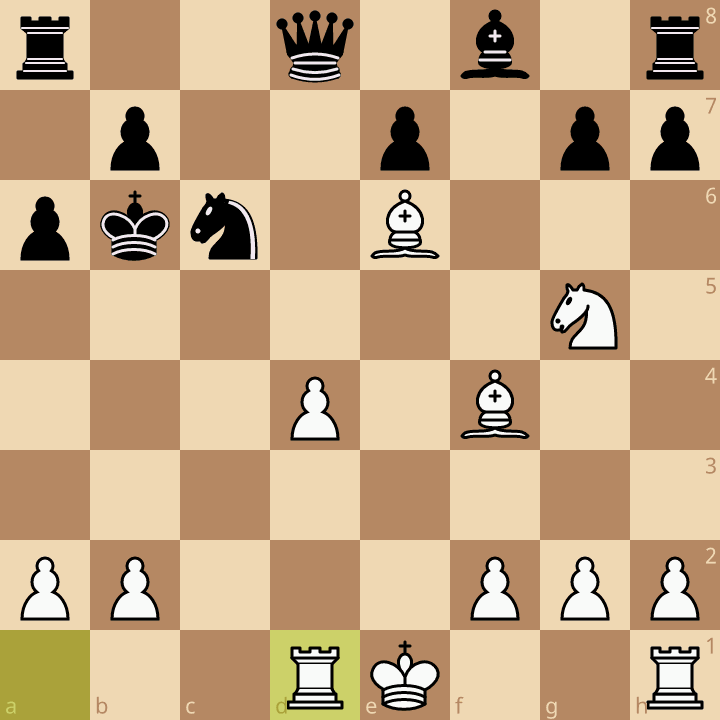
The position has reached a bit of quiescence. Black’s king is on the third rank, Black’s only active piece is the knight on c6, White is ready to castle, and has threats on the kingside to pick up material. The bishop on e6 is very annoyingly placed, as Black would love to pitch the e5-pawn and open the position for his sleeping bishop on f8. White may be down a queen, but Black’s material wealth offers small comfort due to the dis-coordination of all his pieces. By contrast, White’s position is absolutely hyperactive.
14…Ka7 15.d5!
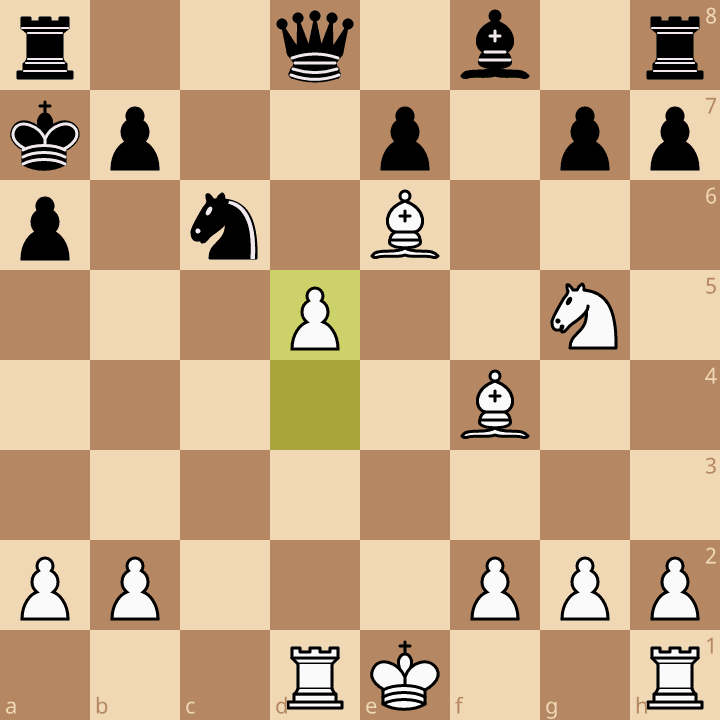
While quite a dramatic position, this move still illustrates the wisdom of pushing the IQP forward: more lines for your pieces. White has opened a diagonal towards the enemy king position and with tempo on White’s Knight.
15…Qa5+ 16.Bd2 Nb4
If Black were to move the queen, dxc6 wins material.
17.O-O g6
Activating the bishop. Black is untangling the position and keeping level. White’s hyperactivity has to be kept under control.
18.a3
Black is forced to return a piece.
18…Qb5 19.Bxb4 Bg7 20.Bxe7
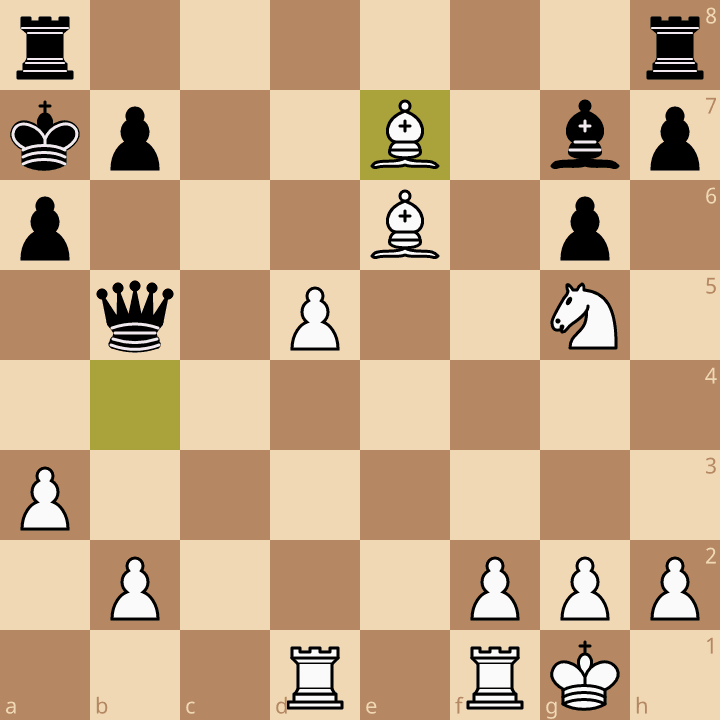
The IQP is now passed and represents a huge threat.
20…Rhe8 21.Bd6 h6
This seems unproductive. 21…Bxb2 is met with the pinning 22.Rb1, but Black has unpinning 22…Qe2 (and 23.Rfe1 doesn’t do much after 23…Qc2!)
22.Nf7
Now the knight is placed perfectly to control the promotion square for the d5-pawn on d8.
22…Rxe6
Black feels compelled to return more material, this time removing one of the pawn’s defenders in the process.
23.dxe6 Qf5
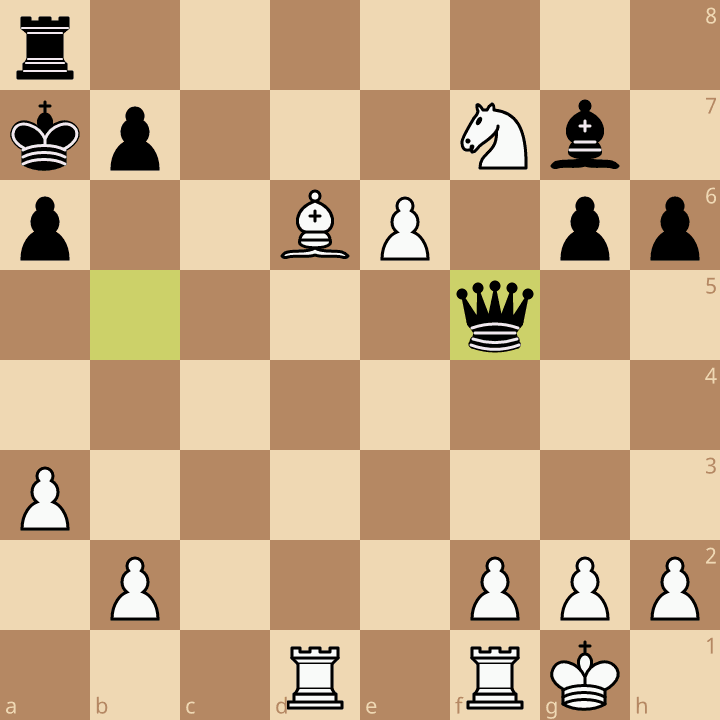
24.b4!
Threatening Bc5.
24…Rc8
Black is preparing another exchange sacrifice and trying to get rid of his back rank problems. White was threatening 25.Bc5+ Kb8 26.Rd8+. 24…Qxe6 is met with 25.Bc5+ b6 26.Rd6 followed by Rxb6.
25.Rfe1
Finally bringing the other rook into the game.
25…Bc3 26.Bc5 Rxc5 27.bxc5 Bxe1 28.Rxe1 1-0
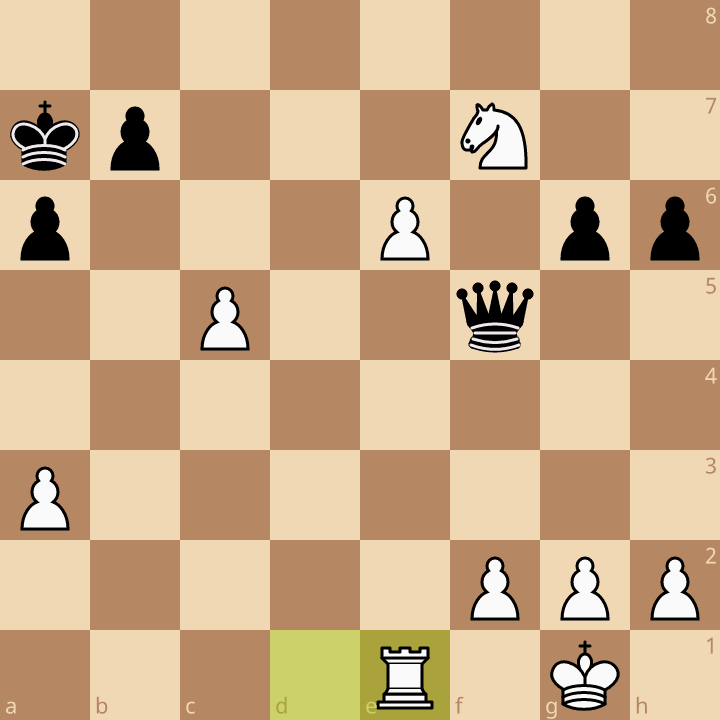
The Panov pawn sings a lovely song.