

Thank you to Jennifer Shahade for the review copy.
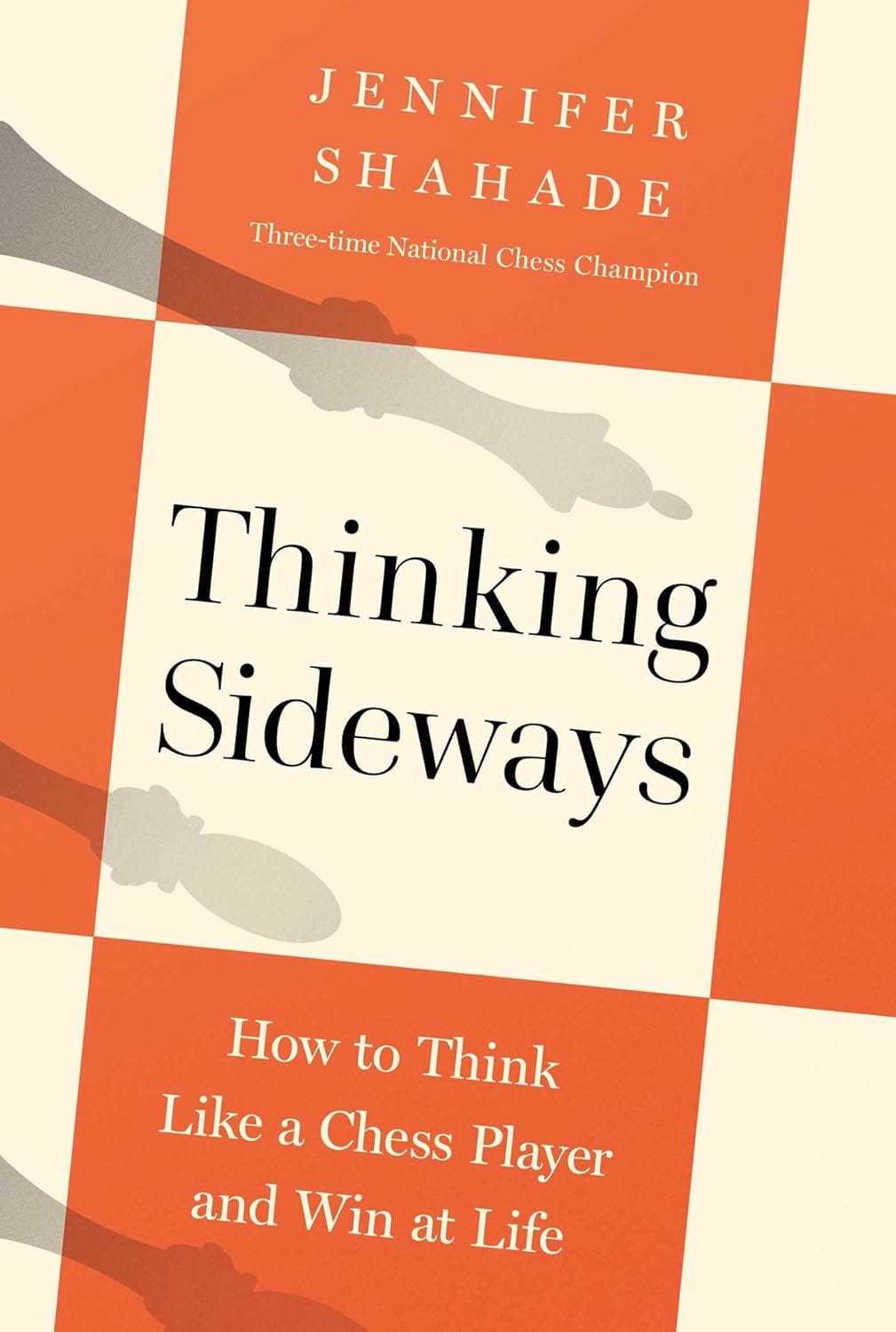
Thinking Sideways’s subtitle is apt: it’s about how to think like a chess player and win at life.
For long-time chess players, a lot of the relayed experience about chess will sound very familiar, but the advice given is still helpful and needs to be repeated for those young in the world (either the real world, or just new to chess). Besides being a national chess champion, Jennifer is also a poker pro, and the intersection between that game, chess, and real life lessons to be gleaned from them is broader than one might expect, and is among the more entertaining aspects of this book.
Thinking Sideways is a brisk and enjoyable read, with each chapter demonstrating concise recommendations and a healthy dose of anecdotes from the author’s own life, as well as the experience of others (fellow chess players, poker pros, or other friends and acquaintances) whom she admires for their ability to look at things a little bit differently.
Examining one’s own life through their experience with chess can be a very enlightening practice, and Jennifer goes through seven chapters, detailing decision-making, time management, memory, pattern recognition, ambition (both as a virtue and as a vice), knowing one’s strengths, and risk-taking, and concludes with one last critical way to think sideways: making the game (life, chess, poker, society) better rather than just being better.
Chess players who have been in the game for a while will most likely nod along in approval as they read through Jennifer’s takeaways from the game and how she took those principles (or came up with new ones) to succeed away from the board as well; I think that the advice given is generally sound, and can help us have a healthier mindset toward our passions, hobbies, and ambitions. Even if it’s things you’ve thought of before, seeing it written down can help concretize those things in your thinking patterns, as it’s good to be reminded of good advice every once in a while. These are things that work well in the chess hall, in relationships, or business meetings.
The most striking chapter for me was the one on ambition. For this chapter, Jennifer interviewed reformed chess cheaters on their motivations for cheating and what got them to stop. Nowadays, chess is a bit of an international meme for the cheating scandals especially surrounding American GM Hans Niemann’s teenage past; but to take a more serious look at the people who have engaged in cheating is something I wish we could get more of, because the psychology can be quite fascinating. This obviously requires understanding listeners and readers and willful interviewees, but I hope that more doors like this can be opened in the future thanks to Jennifer’s work.
My other favorite chapter in this book is the final one, about taking risks. Non-chess players may be surprised to learn that chess games, matches, and tournaments are loaded with risks, but most adult players are familiar with risk aversion and passive thinking and how this can turn a game from a win to a loss. I really appreciated Jennifer’s emphasis on becoming outcome blind, pointing out the correlation/causation fallacy that exists between good decisions and bad results and vice versa. Instead of an outcome-oriented approach, it’s better long-term to use a process-oriented approach, because of luck or the lack thereof in life (this is where poker really shines, right?) Sometimes things turn out unexpectedly, and it’s not always the fault of your process; so becoming blind to outcomes can lead to a happier life. Good processes average out to good outcomes, over time, even though sometimes you just lose. The road to mastery in chess, poker, and life is riddled with thousands of losses on the way to the win, so Jennifer’s advice is to fail sideways — there are always new things to be learned from our failures, and the risk we take by not taking risks is greater than if we do the cold plunge and try hard — no one becomes a champion at life or anything else by not taking risk.
Thinking Sideways is a book with good (and familiar, head-nod evoking) advice, but with some unique anecdotes thanks to the crossways of chess and poker and the people Jennifer has met on the way thus far. Chess and/or poker players will almost all immediately understand the similarities between the games and the life advice, and may be reminded to take some of that wisdom to the table or away from it; non-chess players will learn a thing or two about the meta-game of chess and how to take the skills they’ve learned in other domains and apply it to their own lives. It’s also quite approachable, and can be read in a couple of days, so if you’ve not read something like this before, or you’re at all curious, consider picking it up. I think you’ll find thought-provoking advice inside that’ll make you wonder how you can switch your own thinking patterns for the win.