
Book Review: Spy's Mate, a novel by Brad Buchanan
For fans of Soviet era chess and spy novels.

“What’s the matter Yasha? It’s just a game.”
“I hate chess.” Yasha said.
“You don’t hate chess,” Semyon said. “You hate losing.”
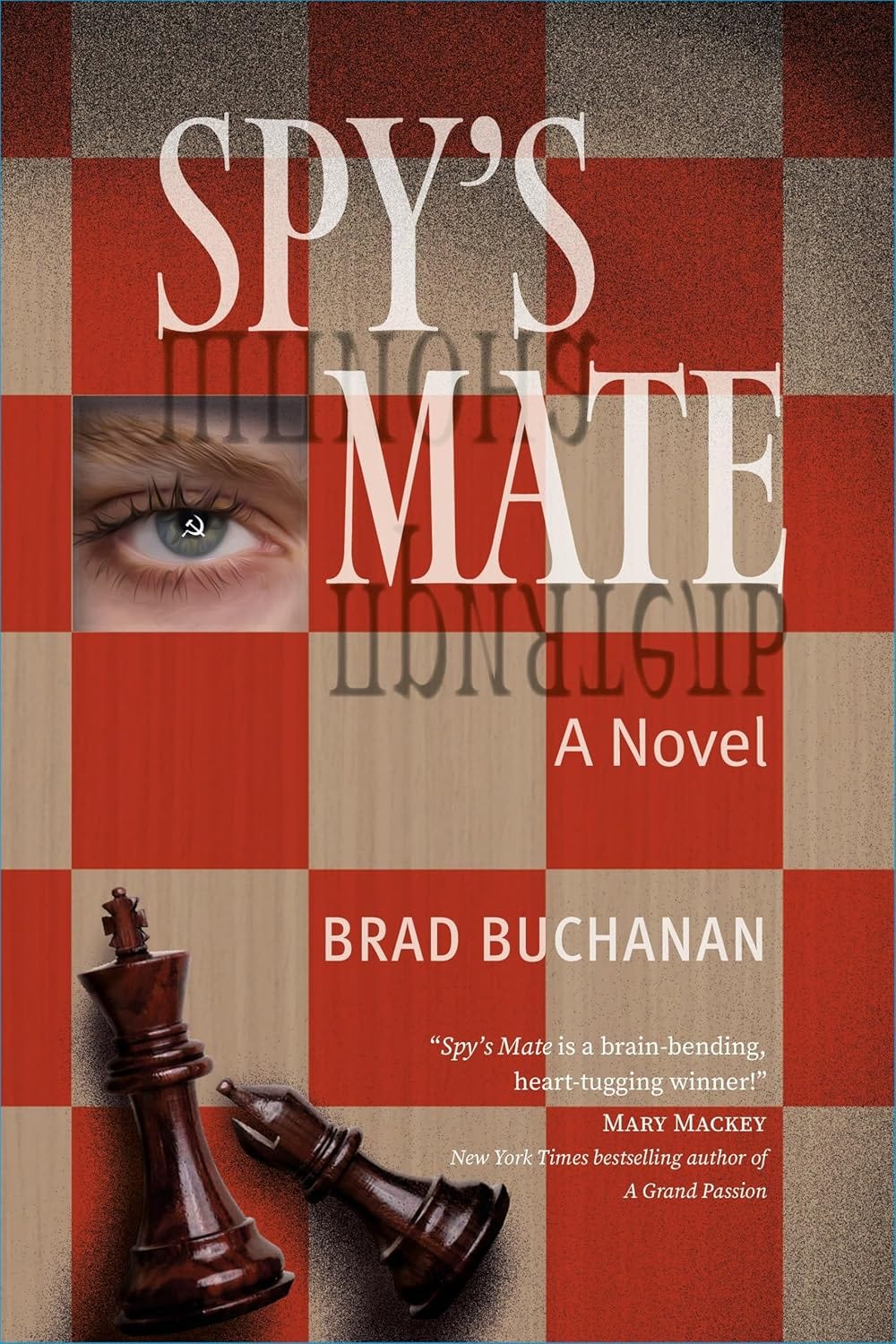
Spy’s Mate by Brad Buchanan is an enjoyable and briskly-paced spy novel set in the USSR. It follows the story of Armenian chess prodigy Yasha Basmanjian, as he seeks to become the best chess player in the world. Along the way, he is caught up in the politics of a fractured Soviet Union, and many players, over the board and elsewhere, seek to use him for their own motivations. I don’t want to give away the story, but I found it both entertaining and thought-provoking.
Rather, I want to highlight a couple features about it that I think makes it a unique book. To start, this novel has actual chess diagrams in it. Any well-equipped student of chess history will recognize certain positions given in the book. In many cases these are classics (Rotlewi-Rubinsten’s incredible queen sacrifice; Nimzowitsch’s immortal zugzwang with Black against Samisch). And if you’re a serious player, you might even take a chance or two to solve the position yourself before continuing to read, as if it were tactical puzzle.
But besides the chess games, there are also certain aspects of historical figures, and here is where I think people may be surprised to find that one character’s nonchalance about playing a correspondence game with the ghost of deceased masters is actually inspired by a real-life, legendarily foul-tempered grandmaster (we are, of course, speaking of Viktor Korchnoi). Korchnoi also receives a later nod (as far as I can tell) in reference to a fictional player wearing tinted glasses. Short history lesson: In Korchnoi’s case he was trying to ward off the effects of a suspected hypnotist who was hired to stare at him unceasingly during his match for the championship against Karpoov in 1978.
All of which is to say, chess here is the center stage of the novel. The story is fictional, but the inspirations are real: The political intrigue of Soviet Chess was real. The government oversight, punishment and espionage by and against chess players was real. The use of chess as a diplomatic tool, and an ideological weapon against the West — all real. The idea of developing electronic chess computers to analyze and eventually dominate the game of chess; the premature bemoaning of chess experiencing a draw death:
There were also some alarmists who theorized that chess, as practiced by its two most able exponents, was moving toward a sterile equilibrium in which draws were the result of correct play by both sides, and outright victory would be impossible unless someone committed an outrageous blunder.
If nothing else, this novel tells a page-turning story that is shockingly plausible based on its setting, and that excites me because it can be an entertaining introduction to one of the most fascinating era of chess: The Soviet era.
The author is himself a chess player and enthusiast, and his enjoyment of the game and its history oozes in each story beat as he effectively draws from it to create a new narrative. Every win, every loss, every obsessive thought about the game we find in the protagonist Yasha, I think many chess players will feel “seen” because of it. And anybody who enjoys a quick-paced spy novel should check it out too, especially if they have even a passing interest in the game.