
Book Review: Silman's Complete Endgame Course
⭐️⭐️⭐️⭐️⭐️ A club player's must-have for theoretical endgames.

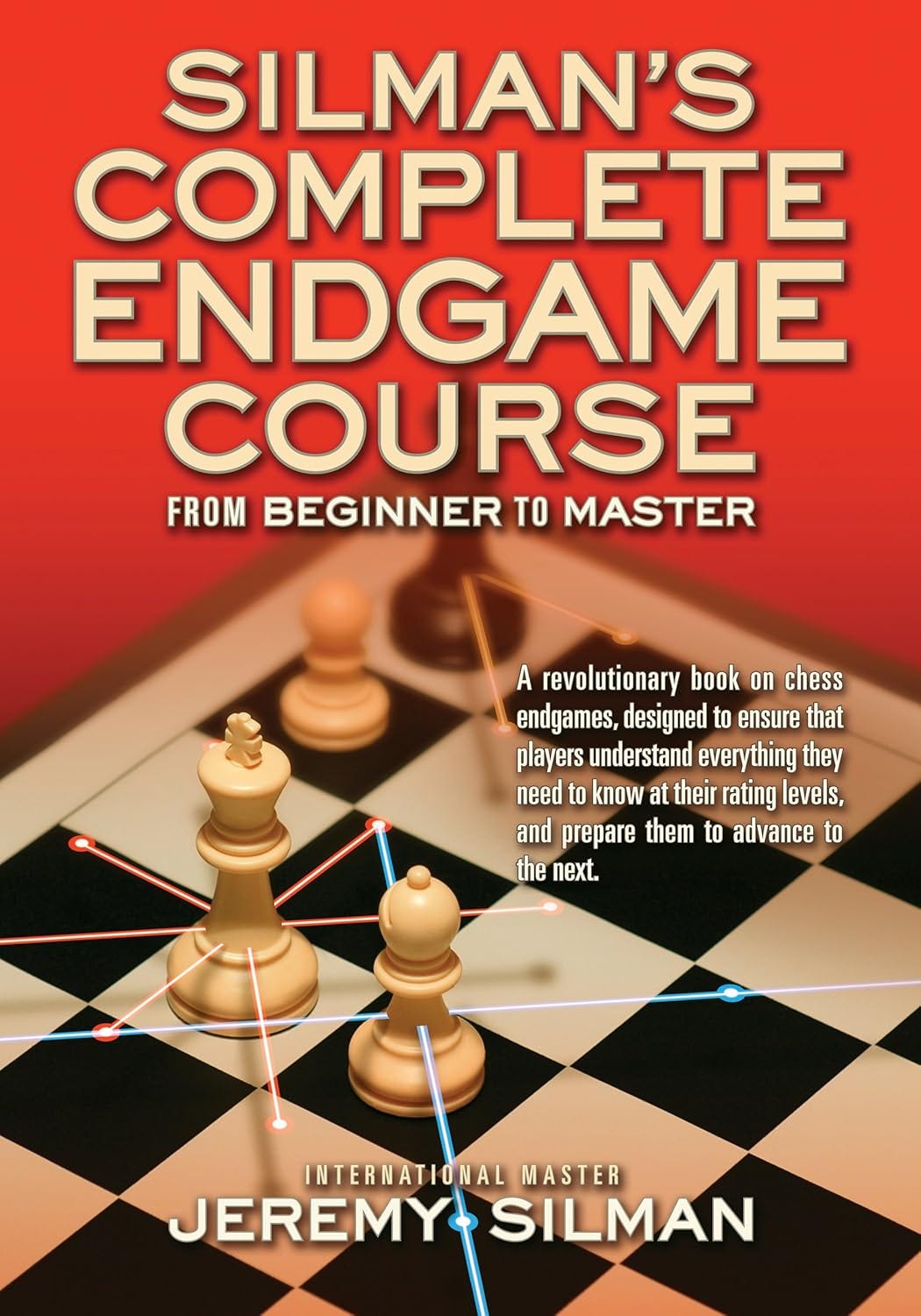
This one’s going to be a blitz book review. If you’re a club player and you’re ready to look into theoretical endgames and you want a book, buy this one. It’s that good. (unless you really need to learn the Bishop and Knight mate).
Silman’s Complete Endgame Course remains a surprisingly unique and cogent theoretical endgame book today. Silman sorts and orders endgames by rating class according to the USCF, starting with the early stalemate tricks and “overkill mates” (where you mate with a queen and/or rook [or 2]) that are more-than-sufficient for players <1000, on to Class E, and eventually to the 2200-2399 rating band. It is shocking to me that other endgame books still do not do this. Silman’s guesswork on what each rating band needs to know is slightly dated, so a wise reader will read and study a bit beyond their current USCF rating. Online ratings vary, but probably still fit into the book’s rubric just fine. Nevertheless, this is my favorite way any endgame book has had its material organized.
There are a lot of endgame books out there, and tons of books on endgame theory, including the very famous (or infamous) Dvoretsky’s Endgame Manual. Nevertheless I’ve never found one quite like Silman’s Complete Endgame Course, which does its best to remain entirely practical and realistic about what a club player needs to know at their rating band. It may not suffice to be a master’s only theoretical endgame book, but I think the vast majority of amateur players can happily get away with just this one, and that they are better served here than, say, with 100 Endgames You Must Know.
I have a few suggestions for readers:
This book is available in print or on Chessable. I have both, and both are excellent; I think the Chessable version in particular is very good. The MoveTrainer version still has its endgame-specific frustrations since alternatives are soft-fails and you can only play whatever the mainline is in the course even when other moves are equally viable; but as a resource for drilling endgames, this is a great choice.
Whatever rating band you find yourself in, study up to your level and one level after that. IE if you’re a 1650 rated player, which slots you into Class B, you should also study the Class A (1800-1999) chapter. If you’re on your way up, you’re more likely to see these kinds of theoretical endgames. In any case this is a book that grows with you and will serve you for many years.
This is a theoretical endgame course, which means it focuses only on one aspect of the endgame that players need to study. Players should also look into endgame tactics and strategic endgames. The final chapter, Endgames for Pure Pleasure, focuses on some pretty combinations, study-like problems, and a handful of tactics as a bonus for all levels of readers, but this acts as a bit of a teaser — the other subjects are worth finding books or courses on too.
Silman’s Complete Endgame Course is deserving of the author’s legacy. It’s my favorite Silman book by far, because it is so simple to use and recommend for others, and cuts off any and all fat that theoretical endgame books often come loaded with. Ergo,


Not going to lie I feel like this book is a bit overrated. I don't like it and it really didn't help me at all. I guess that doesn't mean it doesn't help many others. Maybe it's the material covered in it as I don't think it stacks up to other Silman books but it had me doing the thing where you're reading it and doing the moves on the board but you feel like you're in autopilot and it didn't register.
This is my favorite book of his.