
Book Review: 100 Tactical Patterns You Must Know
⭐️⭐️⭐️⭐️ A good, prose-filled tactics book for intermediate-level players.

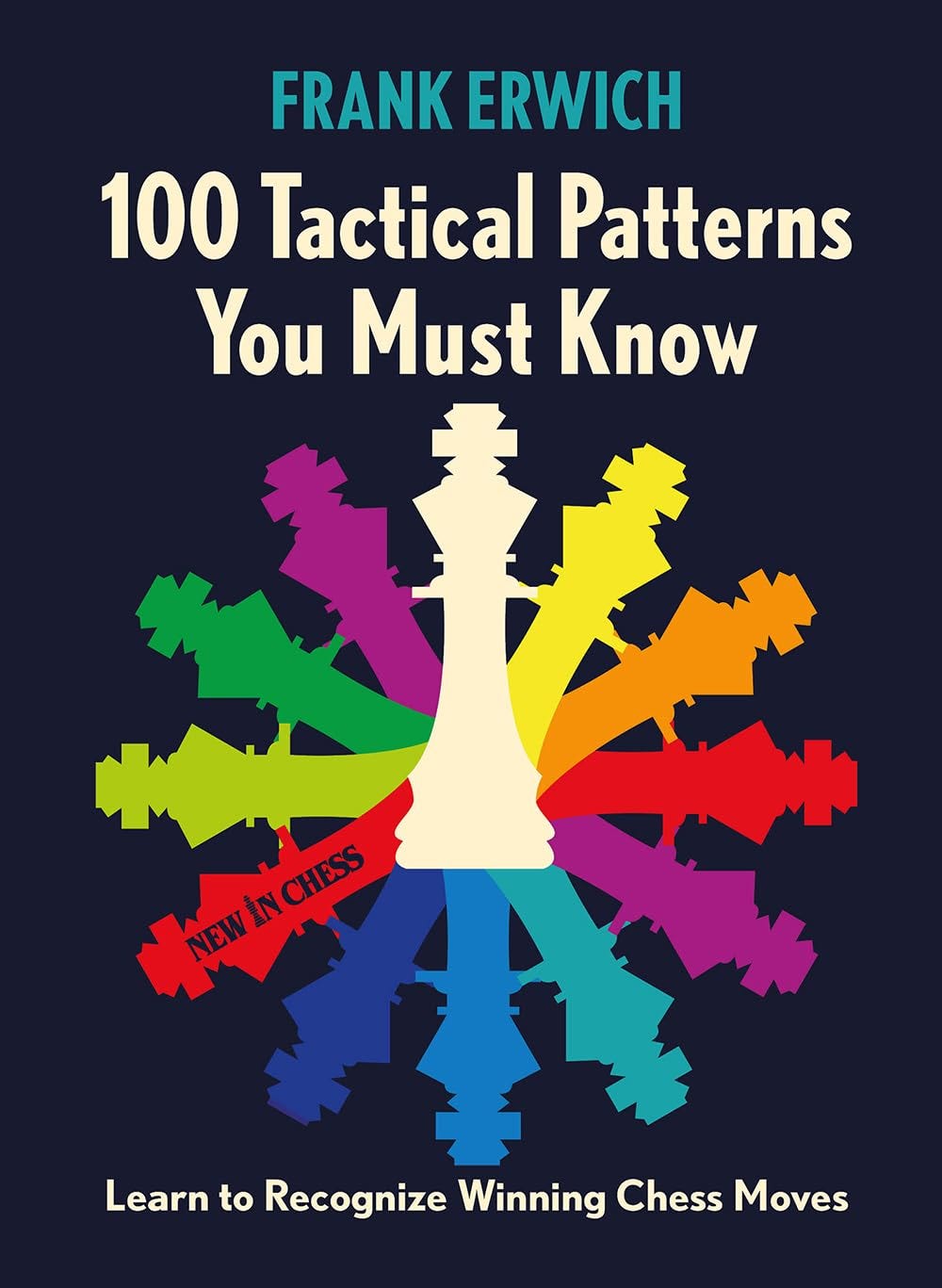
100 Tactical Patterns You Must Know by Frank Erwich is a nice addition to the extremely wide genre of chess tactics books, aimed at the intermediate level. I would guess that players 1200 (USCF chess.com rapid) and up can begin digging into this one.
In it, Erwich names 100 patterns and gives multiple examples for each one. Erwich employs positions from over 400 different games. Each chapter represents a rough category of the kind of tactics. To wit:
Double attack
Discovered attacks and line clearances
Skewers and pins
Pinning bishop vs queen and knight battery
Elimination of the Defense
Trapping pieces
Promotion
Drawing weapons
Defensive weapons
Queen maneuvers and the weak f2/f7-point.
Attacking weapons
There is a bookending chapter that has a few combinations of patterns, though this chapter is rather hilariously brief.
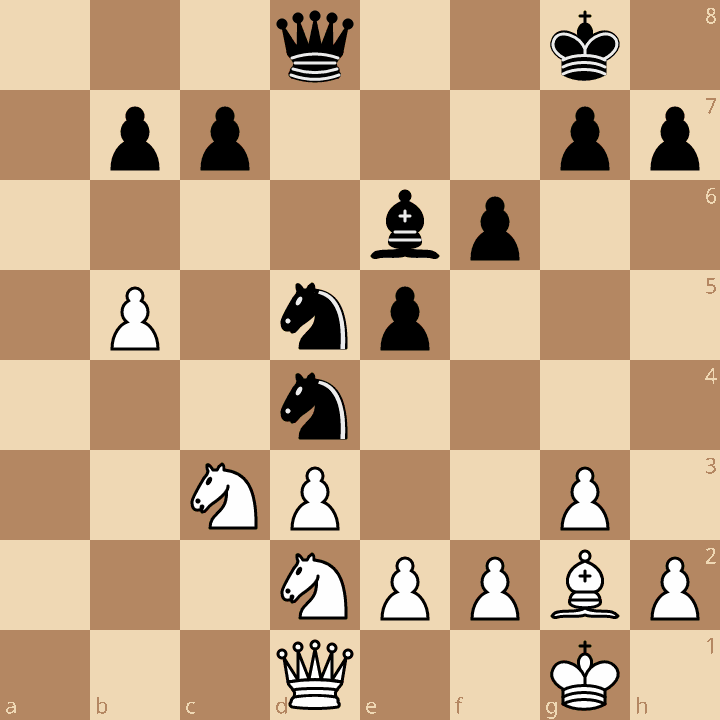
All of these might be commonly listed in other tactics books, but what gives the book its name is the special treatment to the very specific piece configurations involved in these tactics. Because of this Erwich is able to further zoom in from the general concept to the specific pattern. For instance, in the double attack chapter, Pattern 3 (one of my favorite patterns he shows) is “An anti-positional capture to fork or trap a piece.” While the name isn’t quite outside-the-box, the idea behind this pattern is:
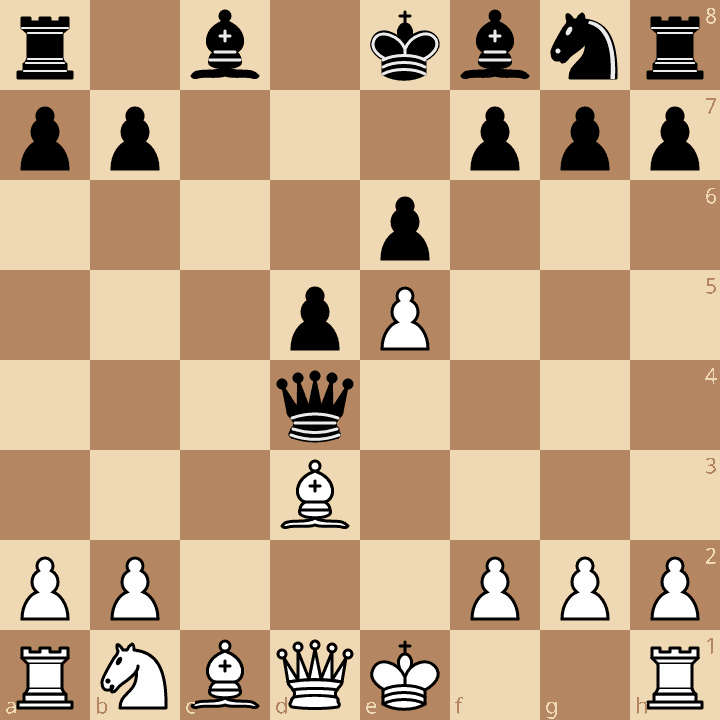
If a pattern is particularly recurrent in an opening line, sometimes that line gets a mention. For instance, in the Discovered Attacks and line clearances chapter, The Milner-Barry Gambit trick (Pattern 15), due to the common opening trap after 1.e4 e6 2.d4 d5 3.e5 c5 4.c3 Nc6 5.Nf3 Qb6 6.Bd3!? cxd4 7.cxd4 Nxd4 8.Nxd4 Qxd4??
Erwich gives multiple examples of each pattern, when it works, and when it doesn’t. This makes for a relatively thorough treatment of most tactical patterns in the book. Examples are taken from master play and online games. Since the book is recent, Erwich’s examples are fresher than some other books, though he is not above sharing the occasional classic tactical example when it’s just too beautiful to exclude.
Compared to a book like Wetesnik’s Tactics from Scratch, 100 Tactical Patterns You Must Know is much more orthodox in its presentation and the way it discusses tactics: example-after-example of the very specific patterns rather than a full-breakdown of principles. I see the merit in both approaches, because 100TPYMK is specifically seeking to train pattern recognition. Perhaps making this a little bit tricky is that some of the patterns are rather specific and cannot be easily generalized (which is why so many patterns have such long names; i.e. Pattern 64: “Sacrificing the queen for a double promotion threat”). The benefit is that most patterns are rather self-explanatorily titled.
100TPYMK is not a workbook, but New In Chess has published a corresponding workbook for it, creatively entitled The 100 Tactical Patterns You Must Know Workbook. So, if you feel like these patterns need to be internalized further after reading the book, the most direct sequel is available for you to attempt that yourself.
What makes 100TPYMK stand out from the myriad other tactics books is its extensive focus on explaining the tactic, and Erwich’s near-prescient anticipation of likely questions to which he preemptively provides answers. Another really nice touch is that Erwich goes out of his way to connect the patterns as the reader goes through.
All that said, this is not a paradigm-shift in tactics books. The amount of effort the reader can put into it can be small (they just read the book casually — and this makes for pretty comfortable bedside chess reading) or extensive (they cover up the answer and find the moves themselves). If you’ve purchased this on chessable, most positions are given as puzzles to solve rather than informationals.
Not a must-have — but a nice-to-have book written with the intermediate-skilled club player in mind.